Patrick Hickey (27 April 1927 – 16 October 1998) was an influential Irish printmaker, painter, architect, and educator whose contributions shaped modern graphic art in Ireland.
Renowned for founding the Graphic Studio Dublin in 1960, Hickey’s mastery of etching and lithography, combined with his international influences and dedication to art education, left an enduring legacy.
His career spanned painting landscapes, designing Irish banknotes and postage stamps, and teaching future generations of artists.
Early Life and Education
Born on 27 April 1927 in Bannu, British India (now Pakistan), Patrick Hickey was the son of a colonel in the Indian Army’s 1st Punjab Regiment. His family relocated to Bedford, England, where he attended Ampleforth College in Yorkshire from 1939 to 1945.
Drawn to art from a young age, Hickey initially prioritised a stable education due to the limited artistic infrastructure in Ireland. In 1948, he moved to Dublin to study architecture, Italian, and art history at University College Dublin (UCD), graduating in 1954.
He worked briefly with architect Michael Scott in Wicklow, where he began painting landscapes, marking the start of his artistic career.
A pivotal moment came when Hickey won a scholarship to study printmaking at the Scuola del Libro in Urbino, Italy, for eight months. There, he specialised in lithography and etching, techniques that defined his artistic output.
His time in Italy connected him with Irish artists like Anne Yeats and Liam Miller, who later supported his endeavours. This international training enriched his technical skills and broadened his artistic perspective.
Early Career and the Graphic Studio Dublin
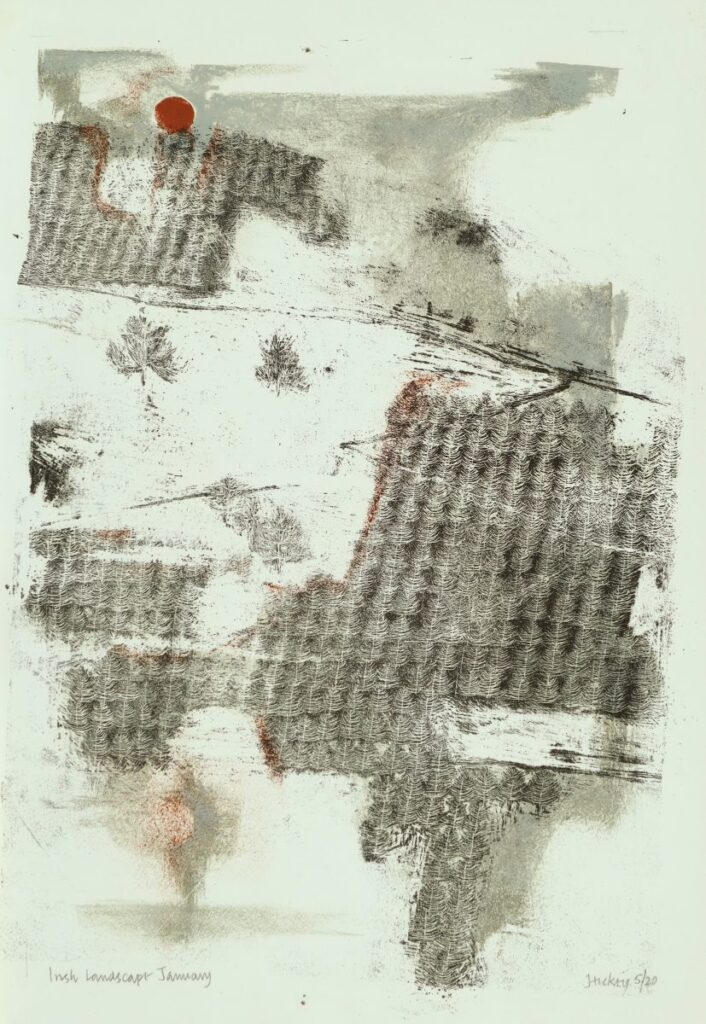
In the 1950s and 1960s, Hickey established himself as a prominent artist, exhibiting his Wicklow landscapes at the Irish Exhibition of Living Art starting in 1955. His reputation grew as a printmaker, with a particular flair for etching and lithography.
In 1960, he co-founded the Graphic Studio Dublin at 18 Upper Mount Street with Anne Yeats, Elizabeth Rivers, Leslie MacWeeney, and Liam Miller.
The studio addressed the scarcity of printmaking education in Ireland, becoming a cornerstone of modern graphic art. Hickey led the studio until 1970, fostering a community of artists and producing some of his most celebrated works.
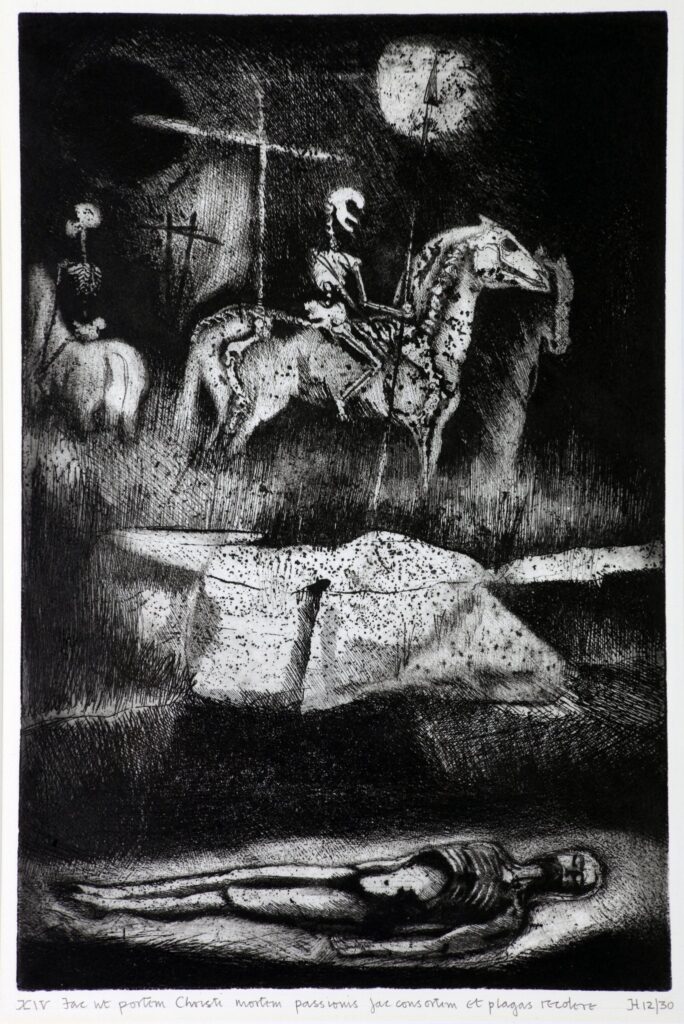
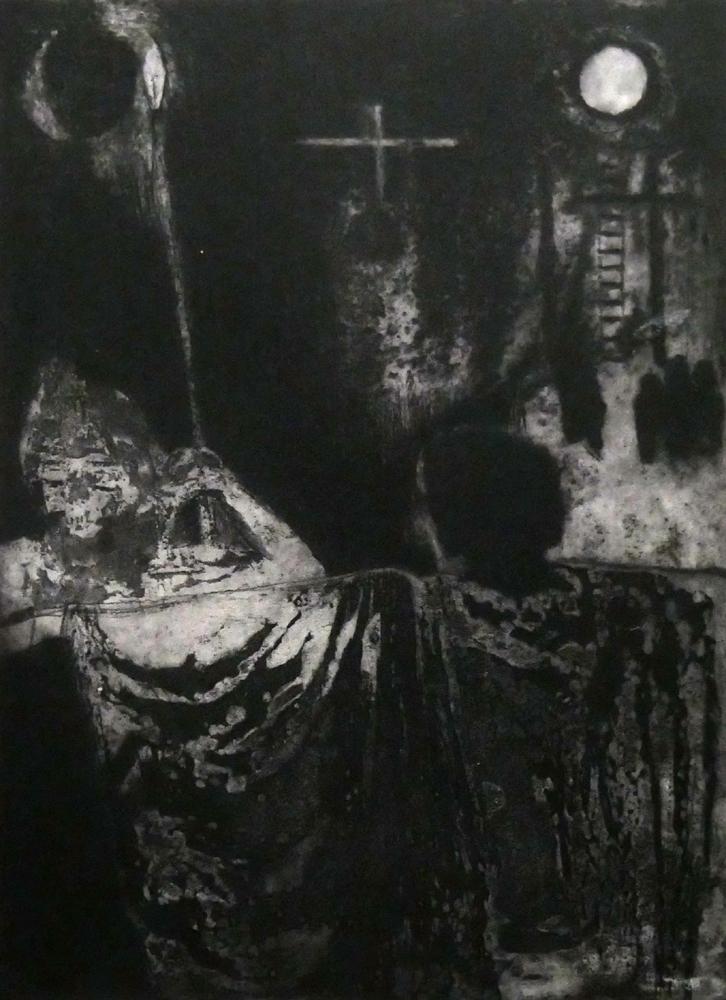
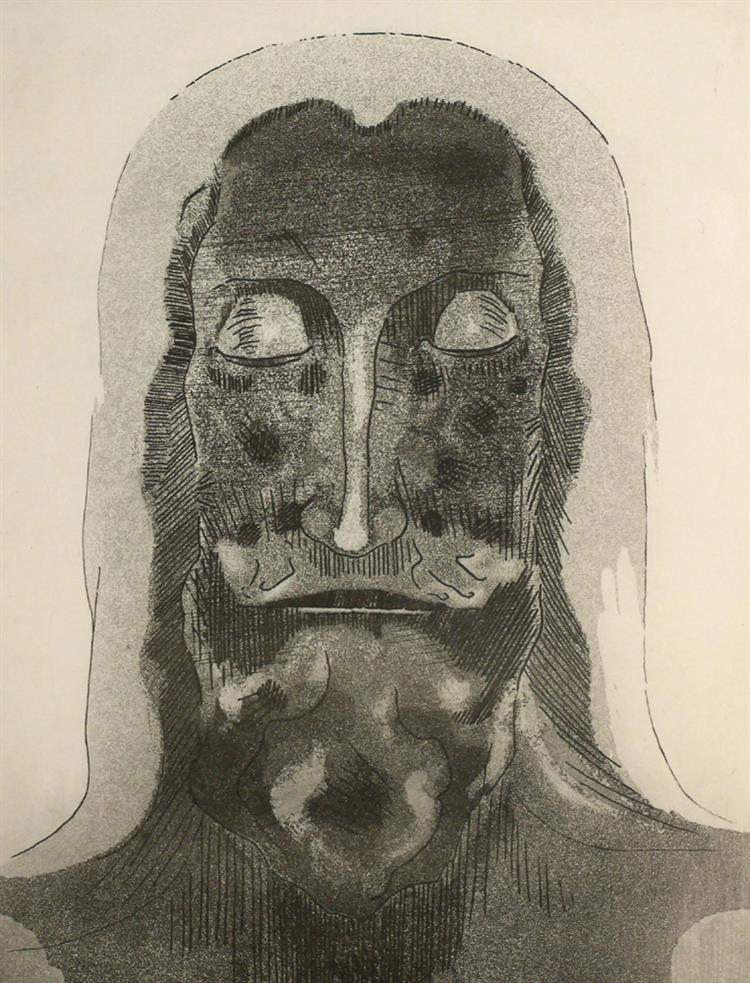
Notable early works include the “Stations of the Cross” (1965) and a series of eighteen etchings illustrating Dante’s Divine Comedy (1965), which won second place in an Italian competition marking Dante’s 700th anniversary.
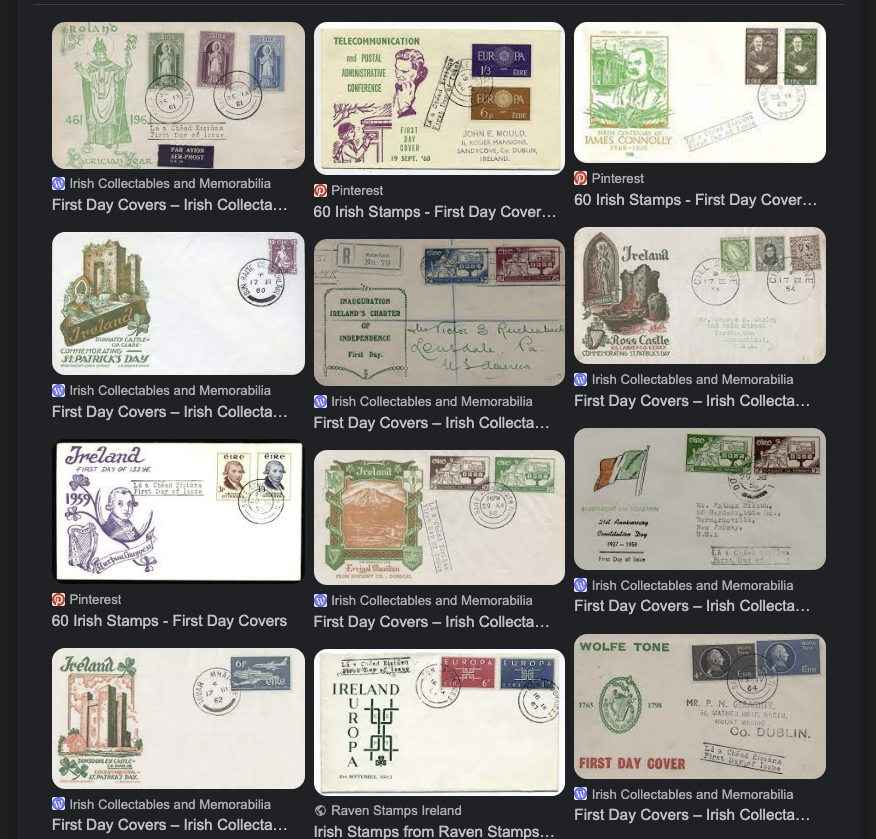
In 1967, Hickey received a Norwegian government scholarship to study watercolour painting, further diversifying his skills. That same year, he designed a series of postage stamps for the Irish government, showcasing his ability to blend art with public design.
Mid-to-Late Career and Artistic Evolution
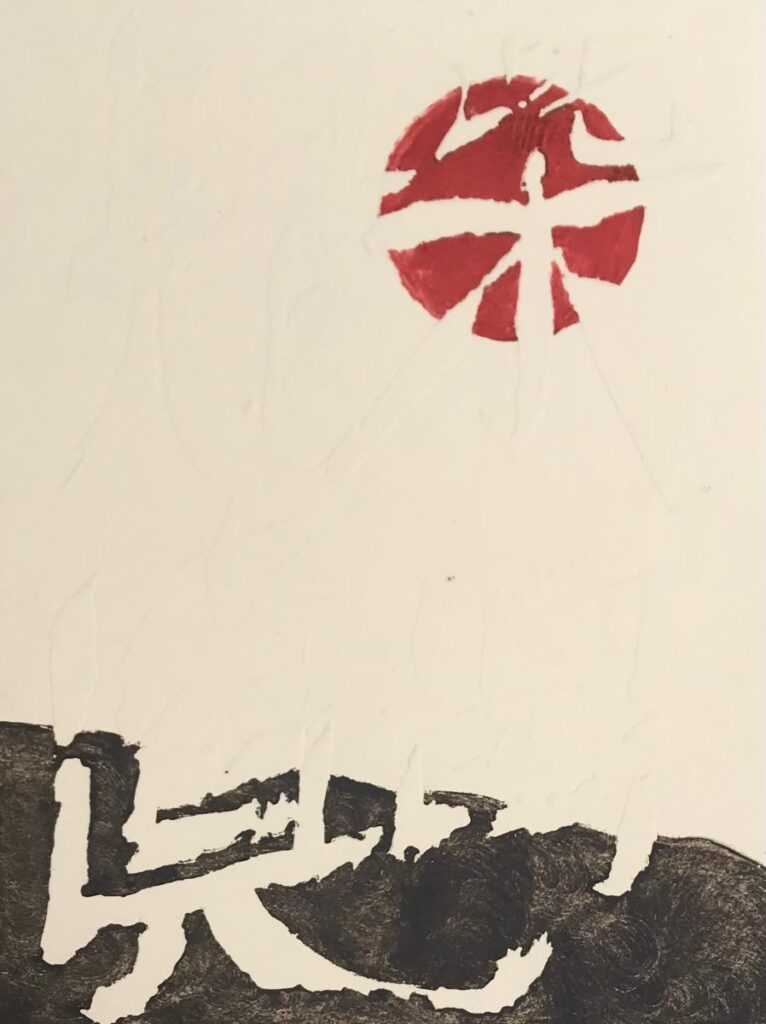
After stepping down as head of the Graphic Studio in 1970, Hickey’s career took new directions. A 1975 trip to Corfu inspired a shift toward etchings with a Japanese aesthetic, most notably his “Months” series, which depicted each month of the year in a calendar format. These works, along with his “Alphabet” (1988) and “Aesop’s Fables” (1990) series, reflected his admiration for Japanese art, which he described as influencing his style even before direct exposure.
Hickey’s appreciation for Japanese minimalism and composition became a hallmark of his later work. He remained active in Ireland’s art scene, participating in the 1971 Rosc exhibitions by organising a display of eighteenth-century Irish delftware at Castletown House, County Kildare.
In 1972, he joined the board of the National College of Art and Design (NCAD) to advocate for art education reform.
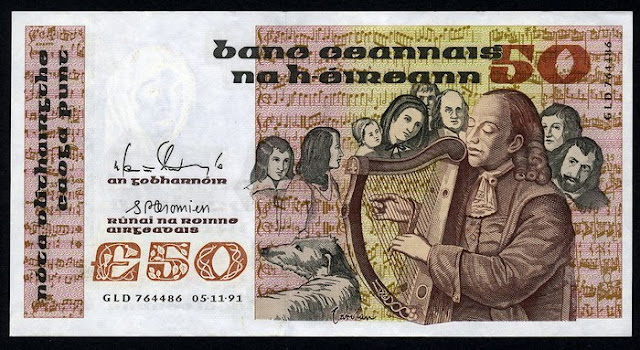
That year, he exhibited his “Bogland, Wicklow” series at the Royal Hibernian Academy and collaborated with engineer Sean Mulcahy and sculptor Michael Biggs to design Irish banknotes.
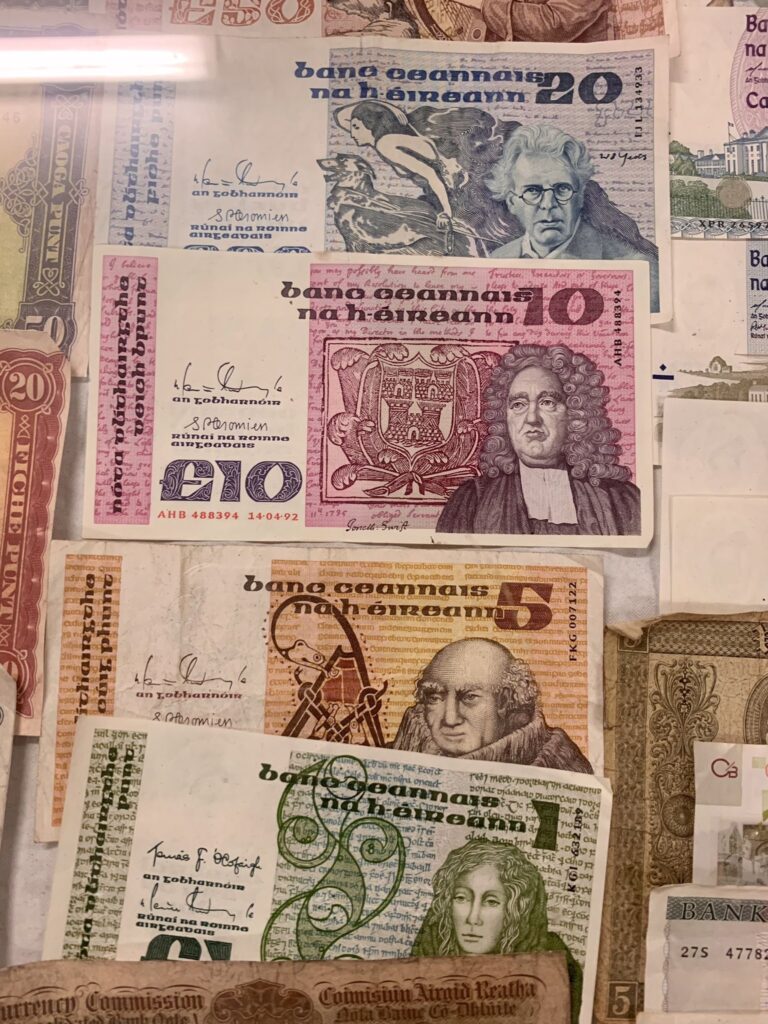
In 1974, his etchings debuted internationally at London’s Purdhoe Gallery, expanding his reach.
In 1980, Hickey engaged with younger audiences, teaching children about art at Dublin’s National Gallery, emphasising its role as a “living place.”
His 1988 exhibition at the Taylor Galleries featured “Garden with Sago Palms Oil,” a significant late-career work.
From 1986 to 1990, he served as head of painting at NCAD and taught part-time at UCD’s School of Architecture, balancing education with his artistic practice.
Health Challenges and Later Works
Diagnosed with Parkinson’s disease in 1973, Hickey faced increasing physical challenges but continued to create prolifically. His later works included oil paintings like “Virginia Creeper” and “Garden Wall: Morning Wicklow Hillside” (1990), and etchings such as “Still Life with Pears and Apples” (1992) and “The Fourth Tree” (1993). In 1989, the Royal Institute of the Architects of Ireland named him an honorary member, recognising his contributions to both art and architecture.
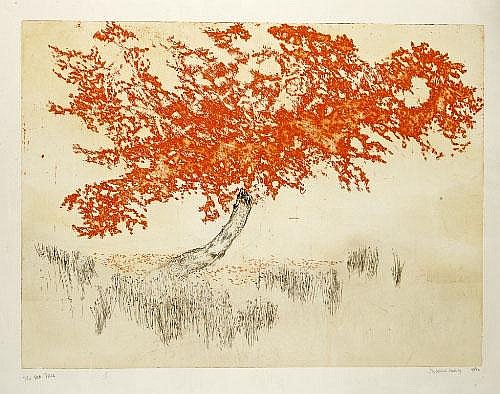

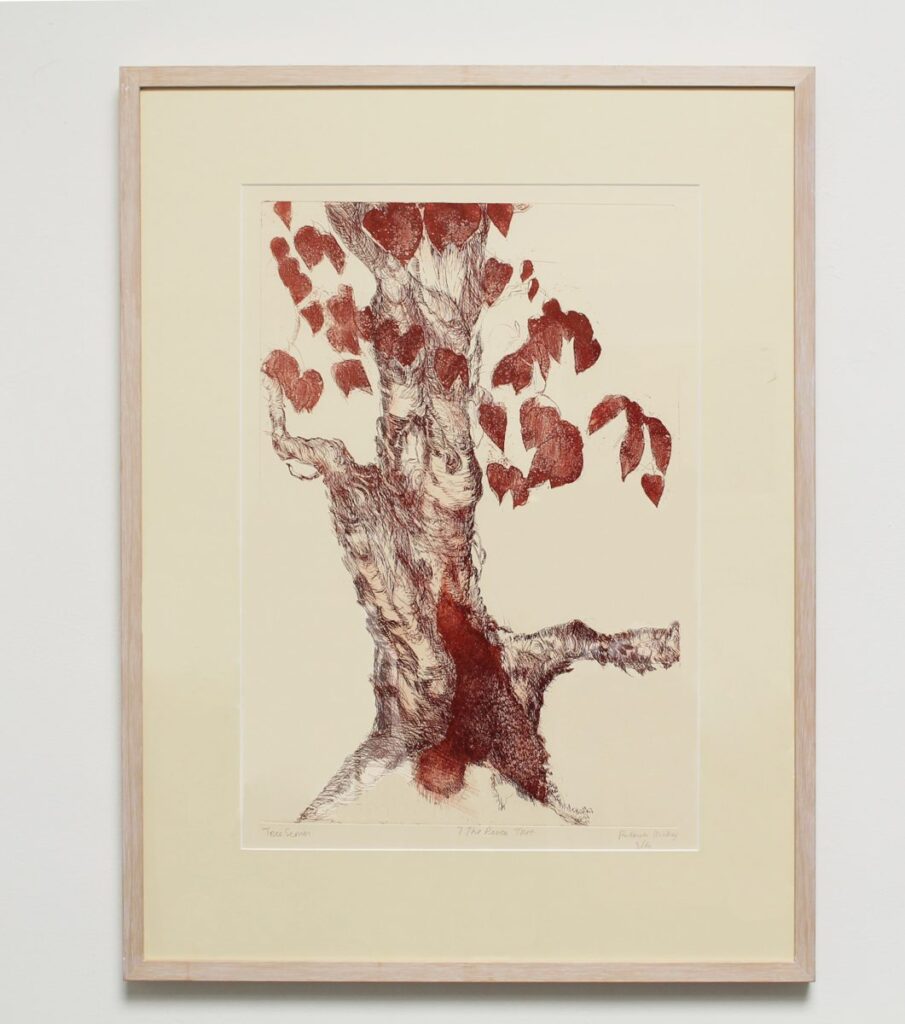
A 1994 retrospective at the institute showcased his career, followed by a 1995 Graphic Studio exhibition of his etchings, including twenty-seven pieces completed in the preceding two and a half years. Hickey’s final exhibition in May 1997 at the Taylor Galleries in Dublin featured seventeen oil paintings, including landscapes and still lifes like “Huguenot Cemetery” and “Cat with Aubergines.”
Despite his deteriorating health, he aimed to make this show his finest, demonstrating his resilience. That year, he moved from Mulgrave Terrace, Dun Laoghaire, to Clearwater Cove, Monkstown, gifting the new owners of his former home a painting of Japanese cherry trees.
Death and Legacy
Patrick Hickey died on 16 October 1998 at his home in Clearwater Cove, Monkstown, aged 71, with his wife, Elizabeth (“Bizzie”) Hickey, by his side. He was cremated at Glasnevin Crematorium. Posthumous exhibitions at the Graphic Studio Dublin (2000) and Dalkey Arts Centre (2007) celebrated his contributions.
His works remain in prestigious collections, including the Arts Council of Ireland, Hugh Lane Gallery, Crawford Municipal Gallery in Cork, Limerick City Gallery of Art, and the University of Limerick’s National Self-Portrait Collection.
Hickey’s legacy is multifaceted: as a founder of the Graphic Studio Dublin, he revolutionized printmaking in Ireland; as an educator, he shaped art curricula at NCAD and UCD; and as a designer, he left a mark on Irish banknotes and postage stamps, some featuring musical notes reflecting his unfulfilled musical ambitions.
Auction records since 2015, such as those on Whytes.ie, show continued interest in his works, with pieces like his Wicklow landscapes and still lifes fetching significant attention.
Hickey’s techniques in etching and lithography continue to inspire artists at the Graphic Studio Dublin. Described by the Irish Independent as a “founder of modern art graphics in Ireland,” his influence on Irish art and design is considered unparalleled by some accounts, cementing his status as a transformative figure.
His son, Joby Hickey, became an artist, studying at Dun Laoghaire Art School, where Patrick’s influence was notable.