Part I of the “Living Law Series,” exploring ritual, skin, and the memory of land.
I’ve long believed our bodies keep their own calendars.
Skin, especially, is a seasonal storyteller.
It flushes in heat, tightens in cold, softens in rain, and burns in wind.
If we listen closely, we realise skin is not simply a surface; it is a barometer of the world around us.
The ancients understood this.
Law, ritual, and medicine all once followed the cycles of season and soil.
To live in alignment with these cycles is to live in treaty, to remember that our bodies are not machines running on linear time, but ecosystems that breathe with the land.
Time as Circle, Not Line
The Irish calendar does not march forward in straight lines. It circles: Samhain, Imbolc, Bealtaine, Lughnasadh. Each fire festival marked a threshold where communities renewed covenants with each other and the land. To ignore those markers was not just negligence, it was a kind of dishonour, a breaking of the relationship.
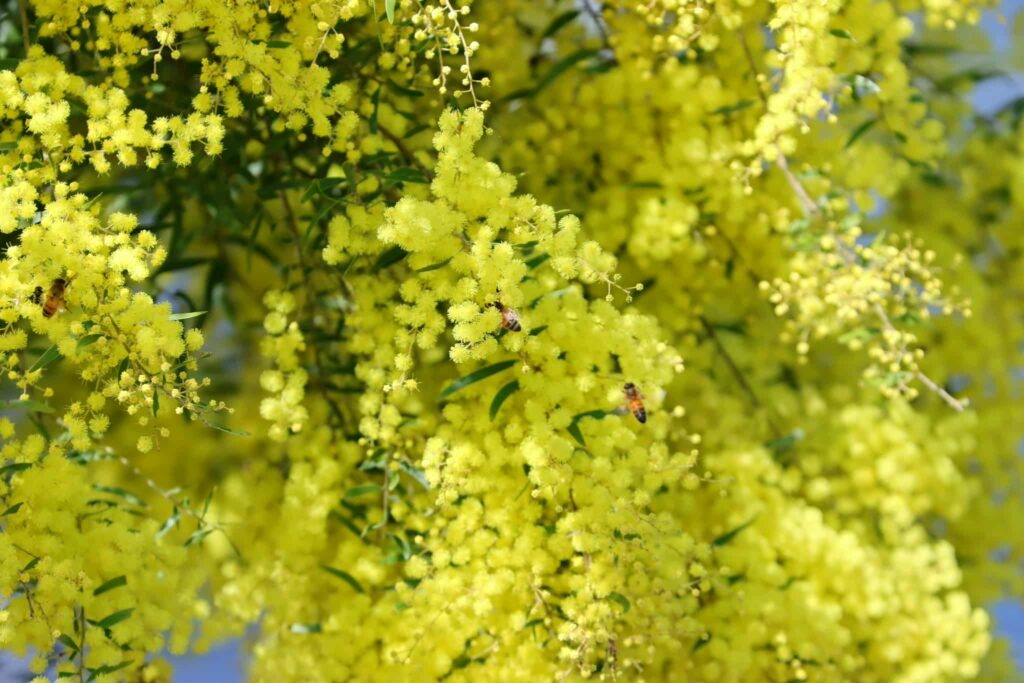
On Wadawurrung Country, where I live, time also flows in circles, though not four but six to seven seasons. Each is tuned to subtle shifts: the flowering of golden wattle, the migrations of birds, the return of eel to rivers, the crackle of bushfire heat. These shifts announce more than the weather. They dictate when to plant, when to hunt, when to gather, and when to rest.
To live by seasonal law is to see time not as a commodity but as a covenant. Just as the Brehon laws balanced harvests with restitution, our skin also negotiates balance with its environment. When we ignore the cycle, imbalance follows: dryness in winter, inflammation in summer, dullness in late autumn.
The Skin-Wheel
What if skincare itself were a calendar? Not a marketing calendar dictating new launches every quarter, but a wheel of the skin, tuned to earth’s turning.
Here is how I read the wheel where I live on the southern coast of Australia:
- Late Winter (Wattle Season) — skin thins, barrier weakens. Richer creams, less exfoliation. Ceramides and oils become law. I often turn to emu apple or quandong, both of which carry resilience against wind.
- Spring (Flowering Season) — congestion rises, as pollens and heat stir. Clay and cleansing herbs restore justice to pores. Nettle, calendula, and clays work together to lift excess while calming irritation.
- Summer (Dry Season) — UV burns and dehydration peak. Kakadu plum, with its abundance of vitamin C, partners with desert lime to protect and restore. Hydration is treaty. Mists become a daily ceremony, not indulgence.
- Autumn (Seed Season) — skin seeks repair; fine lines surface as moisture retreats. This is the time for oils, vitamins, and renewal. Think macadamia oil, or bush tomato extract, both filled with protective compounds.
You may live in a different land, with a different wheel.
Your work is to listen: what flowers announce your spring?
What winds define your winter?
Which fruits arrive as summer’s covenant?
Law and Consequence
The Brehon laws treated seasons seriously. A farmer who sowed against the natural cycle risked losing not just crop but honour. Actions out of season were offences against balance.
Modern culture asks us to scrub, peel, and polish year-round. Perpetual exfoliation is a linear law: more, faster, newer. But the skin is circular. If we strip in winter, we rob it of its protective law. If we overload in summer, we block its breath. If we use the same formulations in August as in February, we ignore the skin’s role as a living witness to the season.
To live druidically is to pause, observe, and align ritual with rhythm. To ignore the season is to act out of law.
A Seasonal Ritual for Readers
Try this in your own bathroom:
- Notice the Threshold. What season are you truly in? Forget the calendar month; look to the land. If the wattles bloom, your body is in late winter, regardless of date.
- Choose an Element. Winter skin seeks fire (oils). Summer skin seeks water (hydration). Spring seeks air (lightness, detox). Autumn seeks earth (seeds, roots, grounding).
- Offer and Receive. Before applying, whisper gratitude to the plant in your hands. Kakadu plum, nettle, and rose, all are allies in treaty. A small acknowledgement anchors ritual in reciprocity.
- Seal the Covenant. After, place both hands over your face. Feel heat rise. This is the handshake between you and the season.
A ritual does not need incense or elaborate chanting. It can be as simple as a pause, a breath, a moment of remembrance before cream touches skin.
Business by the Wheel
In Nala Native, I try to honour this law not only on skin but in commerce. If bush plums suffer drought, I do not force abundance; I make smaller batches or pause. If wattles flower early, I note it and adjust my formulations for barrier repair sooner. This way, the product itself is seasonal, not endless extraction.
This is not always easy in a marketplace addicted to permanence. Algorithms want consistency, not cycles. But the Brehon idea of lóg n-enech, the “price of honour”, guides me. Honour means refusing palm oil despite margins. It means printing on compostable rag paper instead of plastic. It means letting scarcity be truth, not failure.
To follow seasonal law in business is to accept the slowness of the earth as a teacher. Scarcity is not a malfunction; it is a message.
The Body as Treaty-Ground
In Brehon times, the skin itself was protected under law. Any injury carried compensation, because the body was seen as sovereign territory. This idea is profoundly modern, too. Our skin is not canvas for quick fixes; it is land under treaty.
Each time I mist my face with native hydrosol, I am not “fixing” it. I am re-signing the treaty, re-entering law. The lesion or rash is not an enemy but a message. The Brehons would recognise this: imbalance requires dialogue, not punishment.
What might it mean if we treated every blemish as negotiation, every wrinkle as history, every scar as testimony? We would stop declaring war on our bodies, and instead learn how to live in a lawful relationship with them.
Closing
Seasonal law is memory, not invention. Our ancestors already lived by it. Our skin still longs for it. To stand in front of the mirror each morning and ask “What season is this, and how do I live lawfully within it?” is to begin the work of remembrance.

Skin does not lie. It tells us whether we are living in treaty with the land or out of alignment. To restore this treaty is to restore honour, to body, to country, and to community.
Nala means earth.
And this is where we begin, again.
By Aimee Louise
Contemporary Druidess & Skin–Land Steward
Founder, Nala Native
Part of the Living Law Series. A collaboration between Nala Native and Brehon Academy.