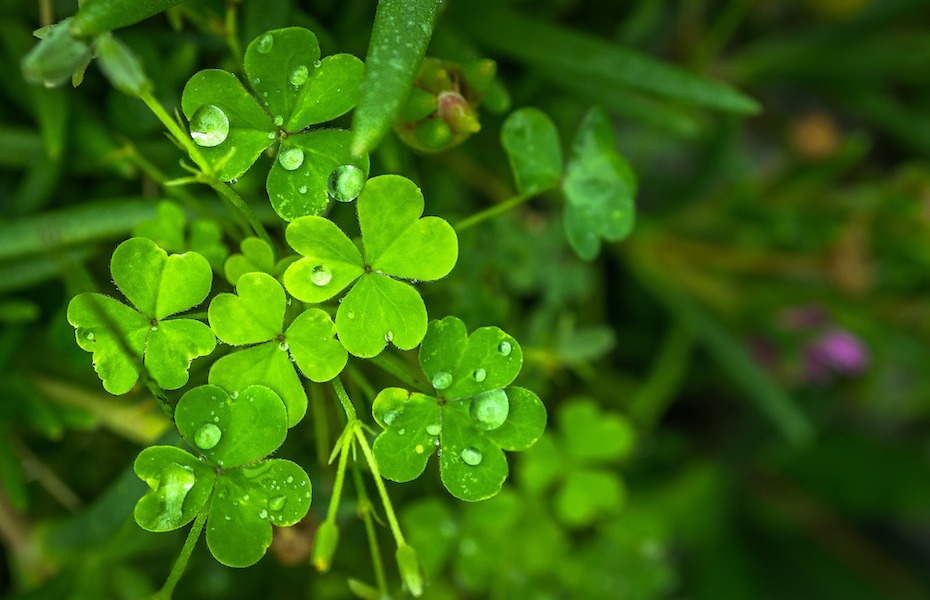
There’s something quietly remarkable about a small, three-leafed plant becoming the symbol of an entire nation.
Most symbols of nationhood are grand things — eagles, lions, towering monuments.
Ireland chose a wildflower that grows in fields and hedgerows, one you might easily walk past without a second glance.
Yet the shamrock has threaded its way through fifteen centuries of Irish history — through faith and rebellion, diplomacy and diaspora — until it became not just a symbol of Ireland, but a symbol recognised the world over as Ireland itself.
This is its story.
Note: If you’d prefer to watch a video about this, click here.
What Exactly Is a Shamrock?
The name comes from the Irish seamróg, a diminutive of seamair, meaning clover — so, quite literally, “little clover.”
It’s a small distinction, but a telling one.
The Irish didn’t just name it after clover; they gave it its own word, its own identity.
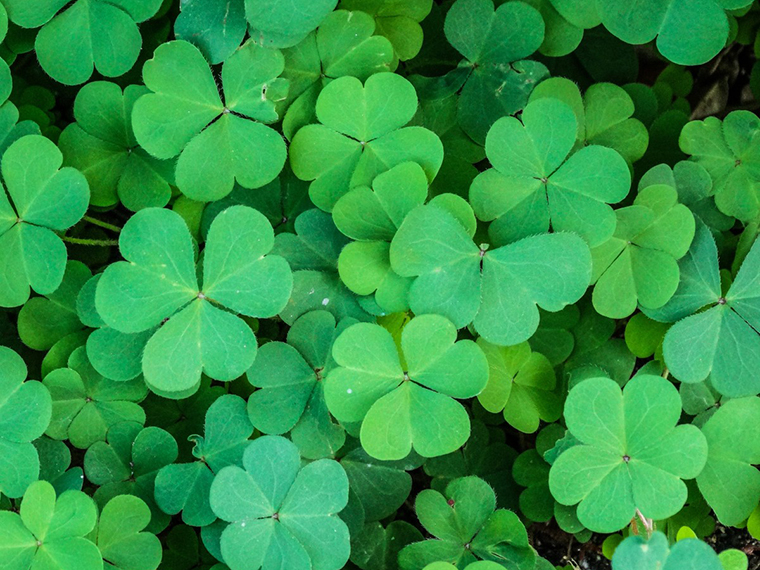
Botanically, the shamrock belongs to the Trifolium genus, most likely Trifolium repens — white clover — or Trifolium dubium, the lesser clover.
Botanists have debated its exact species for generations, and some have even proposed Oxalis acetosella, wood sorrel, as a candidate, given its similarly delicate trifoliate leaves.
In truth, the argument has never quite been settled, and perhaps that’s fitting. The shamrock has always been more than a botanical specimen.
What sets it apart from its close relative, the four-leaf clover, is instructive. The four-leaf clover is prized for rarity — a happy accident of nature, a lucky find.
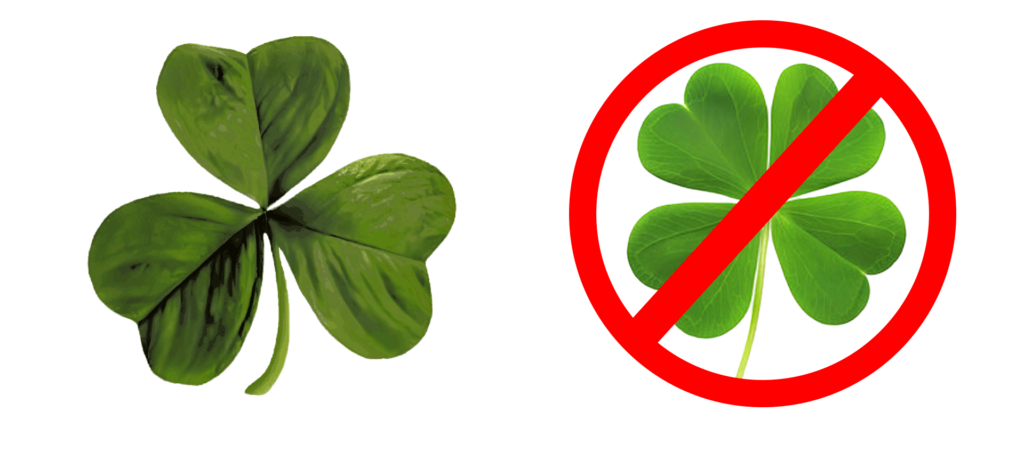
The shamrock’s three leaves, by contrast, have never been about luck or chance.
They have always been about meaning. And that meaning begins with a man walking the hills of 5th-century Ireland, plant in hand.
Three: A Number That Already Mattered
Before we get to Patrick, we need to understand the world he walked into — because the shamrock’s power didn’t begin with Christianity. It began much earlier.
Celtic tradition was deeply threaded with triads. The Celts organised knowledge, wisdom, and even their gods in groups of three.
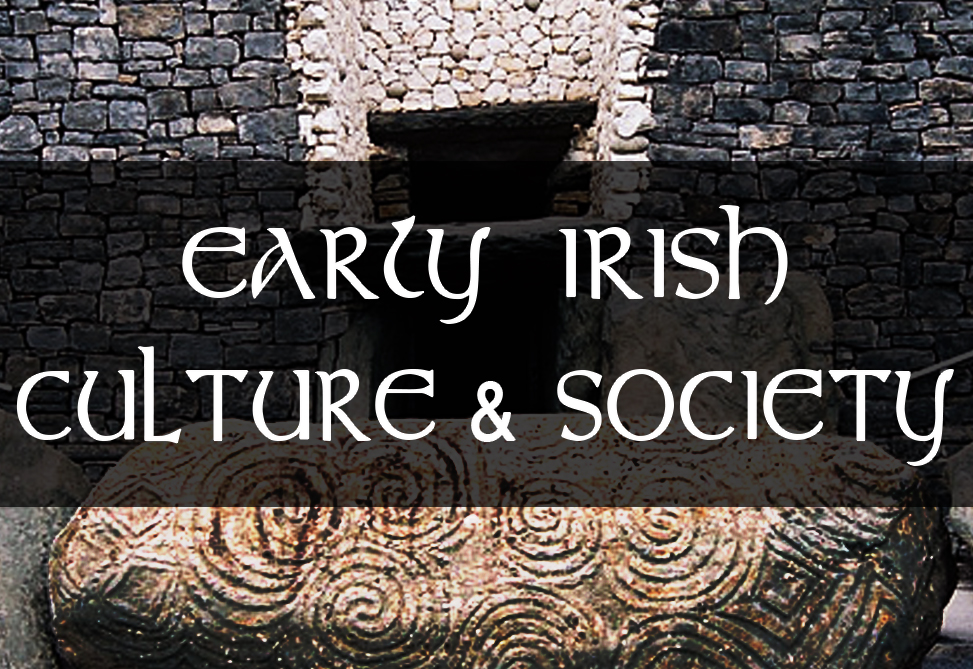
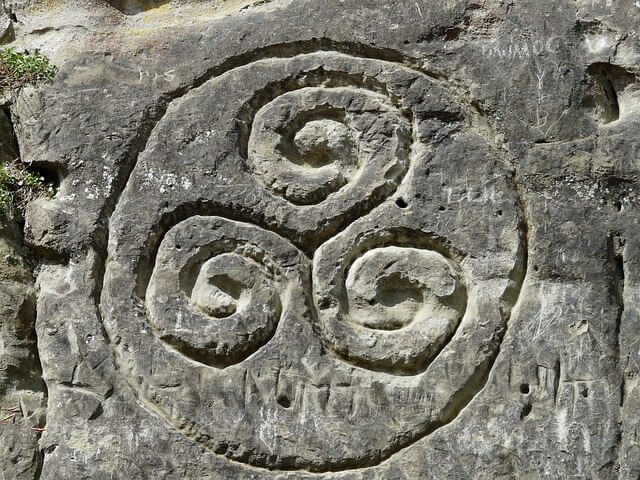
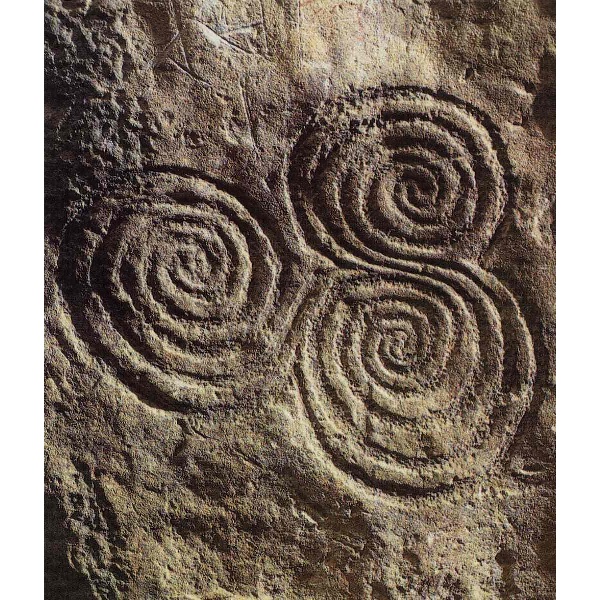
One of the most enduring expressions of this is the triskele — the triple spiral motif carved into ancient Irish monuments like Newgrange, predating Patrick by thousands of years.
It spoke of movement, of cycles, of three forces held in eternal balance.
The gods themselves reflected this principle.
The Morrígan, one of the most powerful figures in Irish mythology, was herself a triple goddess — three aspects, one being.
The druids encoded their teachings in triadic form: three things that bring luck, three things that corrupt a man, three foundations of wisdom.
Even the landscape was understood in triads: land, sea and sky.
The number three carried a sense of wholeness, of completion, of things held in balance.
It wasn’t merely a number — it was a cosmological principle.
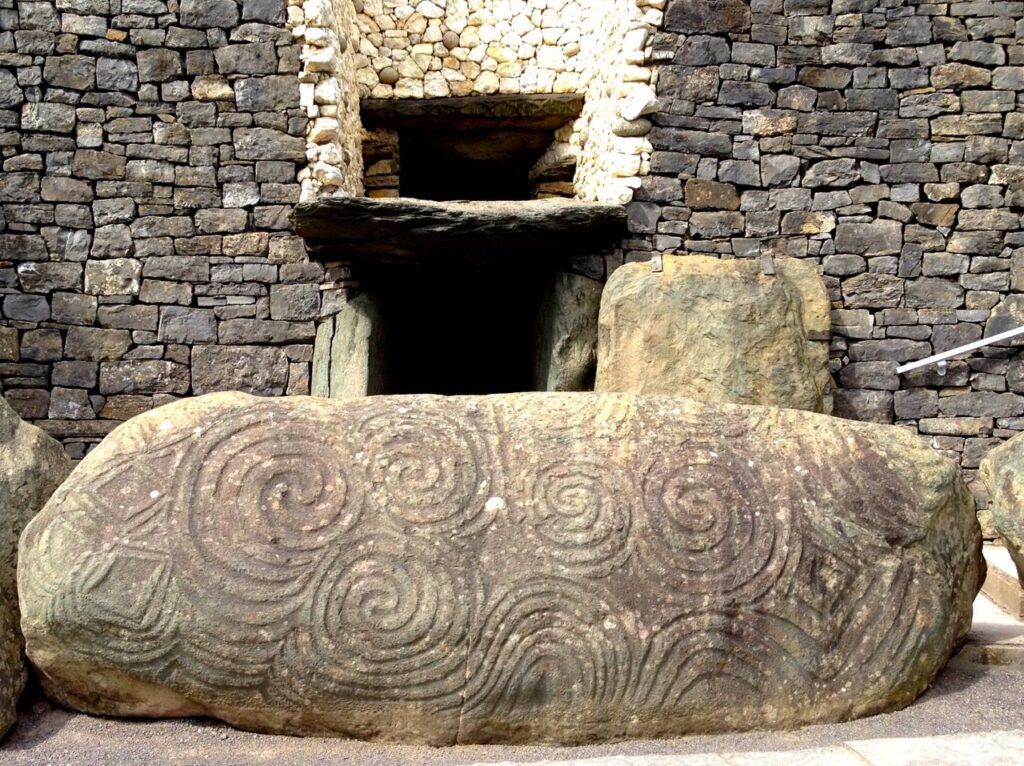
The shamrock, with its three equal leaves growing from a single point, embodied that principle in visible, living form.
Long before Patrick arrived, it may already have carried an aura of good fortune and sacred harmony in the Irish imagination.
Which makes what happened next all the more elegant.
Saint Patrick and the Lesson of the Three Leaves
To understand why the shamrock matters, you have to understand the man who gave it its most famous meaning.
Patrick was not Irish by birth.
He was a Romano-British Christian, most likely from somewhere in western Britain, possibly Wales, who had been captured as a teenager and brought to Ireland as a slave.
He spent six years tending sheep on Irish hillsides before escaping, finding his way home, and — in one of history’s more unlikely turns — choosing to come back.
He returned as a missionary, ordained as a bishop, and driven by a belief that God had called him back to the people who had once enslaved him.
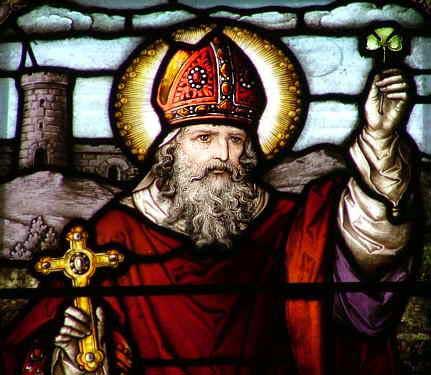
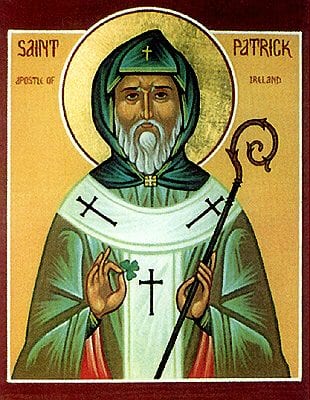
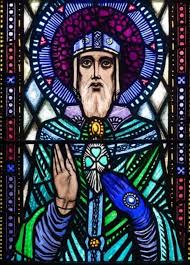
Ireland at this time was a deeply Celtic, deeply pagan land.
The Irish worldview was rich and complex — a world animated by spirits, governed by druids, and organised around beliefs that had no room, at first glance, for the Christian God.
Patrick’s task was enormous.
What made Patrick remarkable wasn’t force or authority.
He had neither.
What he had was a gift for speaking to people in their own language — not just literally, though he did learn Irish, but spiritually and culturally.
He looked for the bridges between what the Irish already believed and what he was trying to teach them.
And one of those bridges was the shamrock.
The central mystery of Christianity — the one most likely to confuse, to frustrate, to seem simply paradoxical — is the Trinity.
How can God be three things at once?
How can Father, Son, and Holy Spirit be distinct from one another and yet be the same God?
Theologians have written libraries trying to explain it.
Patrick, standing in a field in 5th-century Ireland, reached down and pulled up a shamrock.
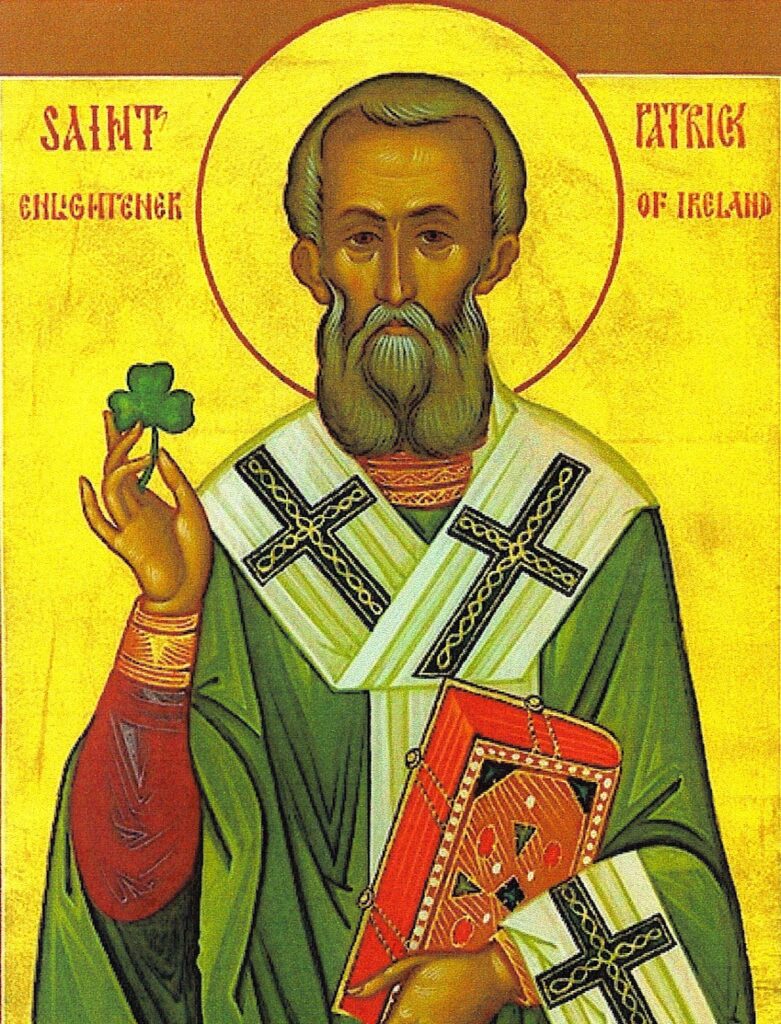
He held it out.
Three leaves — see them, touch them, count them.
And yet one stem, one plant, one living thing.
You cannot separate the leaves from the plant and still call it a shamrock.
You cannot separate the Father, the Son, and the Holy Spirit and still speak of God.
It was a simple gesture, but simplicity is often the mark of genius.
The Irish were not a people who needed things made simpler — they were sophisticated, poetic, and deeply philosophical.
But they were also a people who lived close to the land, who found meaning in the natural world, who understood that great truths could be held in small things.
Patrick’s shamrock spoke directly to that sensibility.
And crucially, for a people already attuned to the power of threes, it didn’t feel foreign.
It felt like something they already half-knew.
The story doesn’t appear in written records until centuries later — the first clear accounts come from 17th-century clerics, including the Franciscan scholar Luke Wadding, writing in the 1620s.
Patrick’s own writings, the Confession and the Letter to Coroticus, make no mention of shamrocks at all.
Some historians treat the tale with scepticism for precisely this reason.
But the absence of early written evidence doesn’t make the story false — it may simply reflect how oral traditions work, passed down through generations before anyone thought to write them down.
And there is something in the story that rings true to Patrick’s character.
Everything we know of him suggests a man who operated through persuasion, through meeting people where they were.
The shamrock story fits him perfectly — a bridge between the old world and the new, between Celtic reverence and Christian faith.
If you want to learn more about Saint Patrick, check out the video below I made in 2025 to commemorate his day.
From Faith to Nation
For centuries, the shamrock remained primarily a religious emblem, tied to Saint Patrick’s feast day and worn in his honour each 17th of March.
But by the 18th century, Ireland’s circumstances had changed dramatically, and so had the shamrock’s meaning.
Under British rule, Irish Catholic identity was actively suppressed.
The Penal Laws restricted Catholic worship, education, and land ownership. In this context, the symbols of Irish identity became quietly political.
To wear a shamrock was not merely to honour a saint — it was to assert that you were Irish, that your culture had not been extinguished, that you were still here.
Nationalist groups, most notably the United Irishmen in the 1790s, adopted the shamrock as an emblem of resistance.
Members wore it in their hatbands alongside green ribbons; it appeared on flags bearing the defiant motto Erin go bragh — Ireland for ever.
It featured in pamphlets, on badges, and even in the title of short-lived nationalist newspapers, including one simply called The Shamrock.
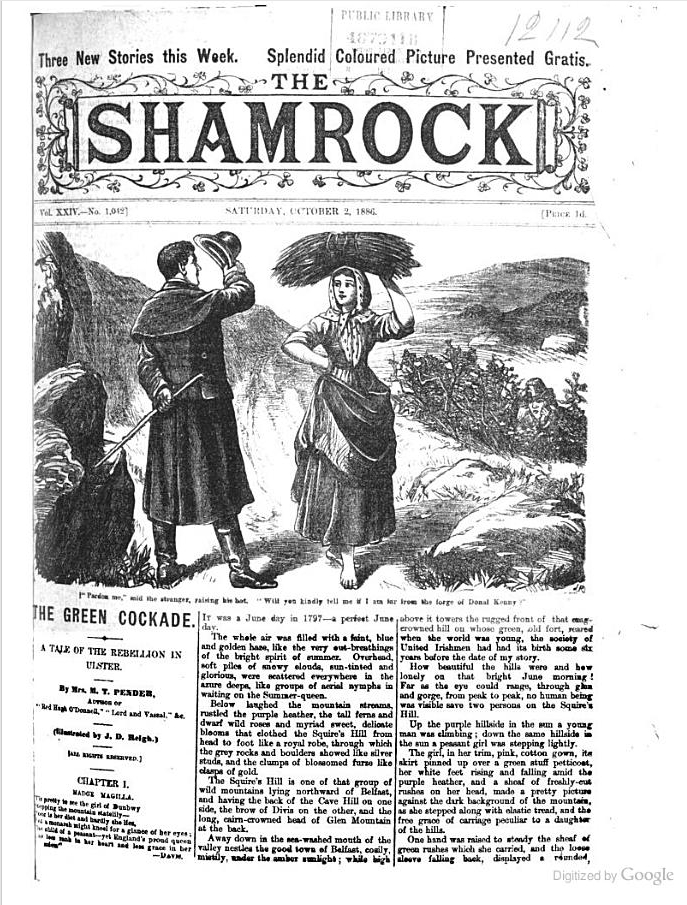
Saturday, Oct. 2nd, 1884
It was a small, green declaration of defiance — drawing no attention from a distance, but understood perfectly by those who shared its meaning.
Over the following century, as Irish nationalism evolved and the diaspora spread across the world, the shamrock’s militancy gradually softened into something broader and more enduring: cultural pride.
It became the emblem not just of those fighting for Ireland, but of everyone who felt Irish — wherever in the world they happened to be.

Today, that identity is woven into the fabric of major institutions. The shamrock appears on the livery of Aer Lingus, Ireland’s national airline, on the crest of the Irish Rugby Football Union, and on the branding of countless Irish businesses and cultural organisations.

Few nations have gone so far as to legally protect a plant.
It is even a protected trademark under Irish law — its commercial use restricted to genuinely Irish goods and services, ensuring it cannot simply be borrowed or diluted.
A Bowl of Shamrocks and a Transatlantic Bond
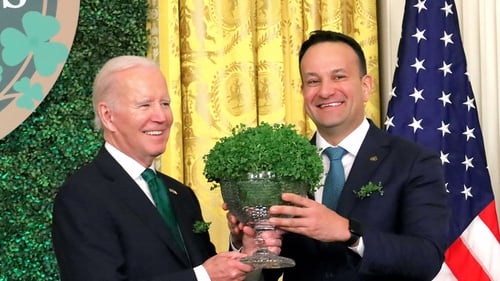
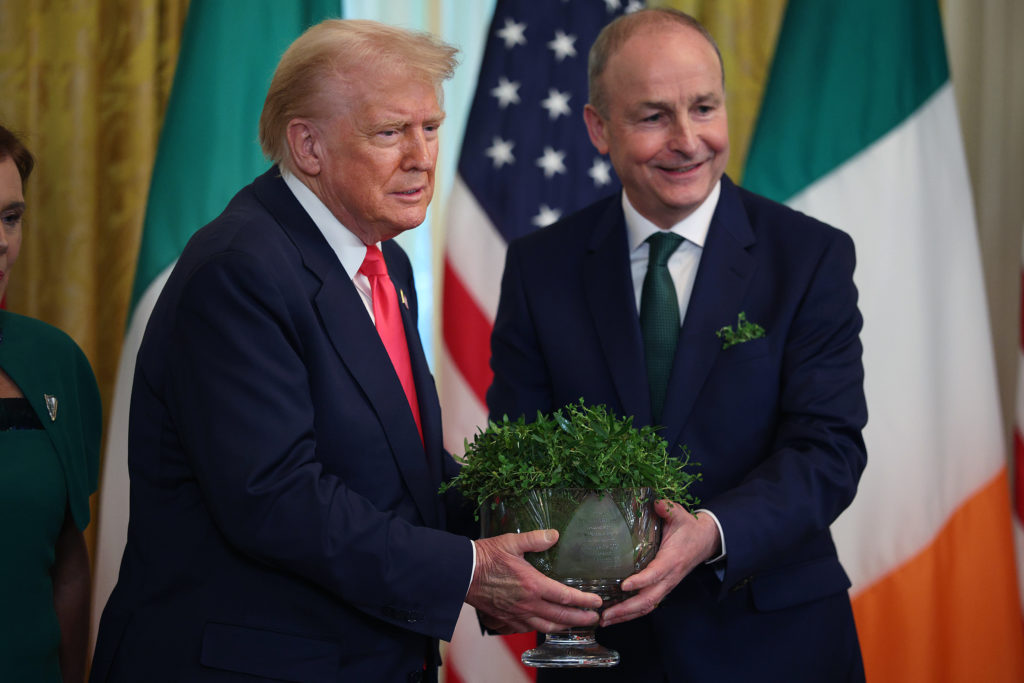
Every Saint Patrick’s Day, a quietly charming ritual takes place at the White House.
The Irish Taoiseach — Ireland’s prime minister — presents the sitting President of the United States with a gift: a handcrafted bowl of Waterford Crystal, etched with shamrock motifs, and filled with fresh shamrocks, often grown in County Cork soil.
It is one of the most enduring diplomatic traditions between two nations, and it began with a gesture that was, in its own way, very Irish — personal, warm, and rooted in a sense of shared history.
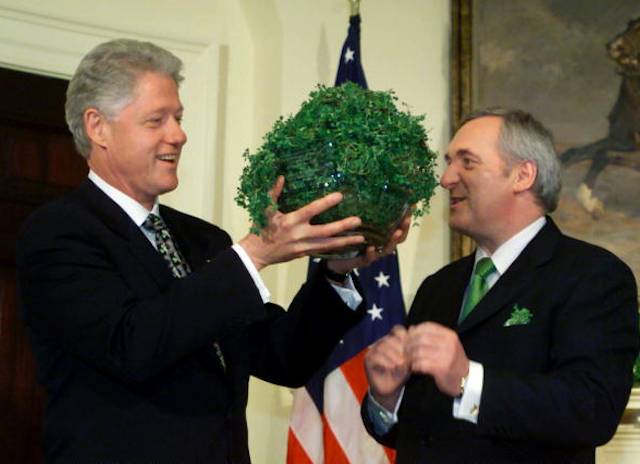
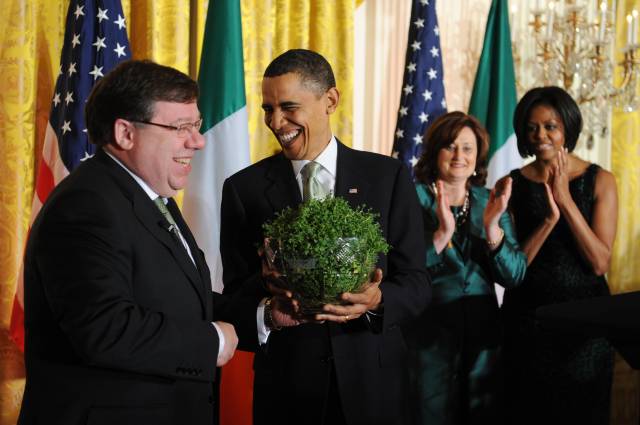
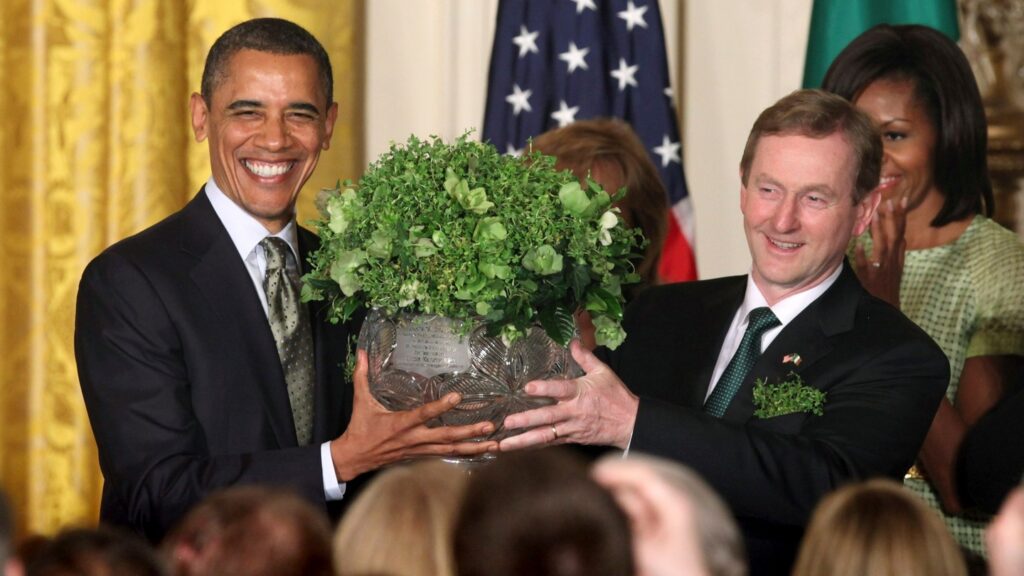
In 1952, Irish Ambassador John Hearne sent a simple box of shamrocks to President Harry S. Truman.
There was no grand ceremony, no political agenda — just a small expression of goodwill between an old country and the nation that had welcomed so many of its people. Truman, by most accounts, was delighted.
The following year, it became a formal tradition.
Taoiseach Éamon de Valera made the first official presentation, and the shamrocks were now nestled in the distinctive Waterford Crystal bowl that has since become as much a part of the ceremony as the shamrocks themselves.
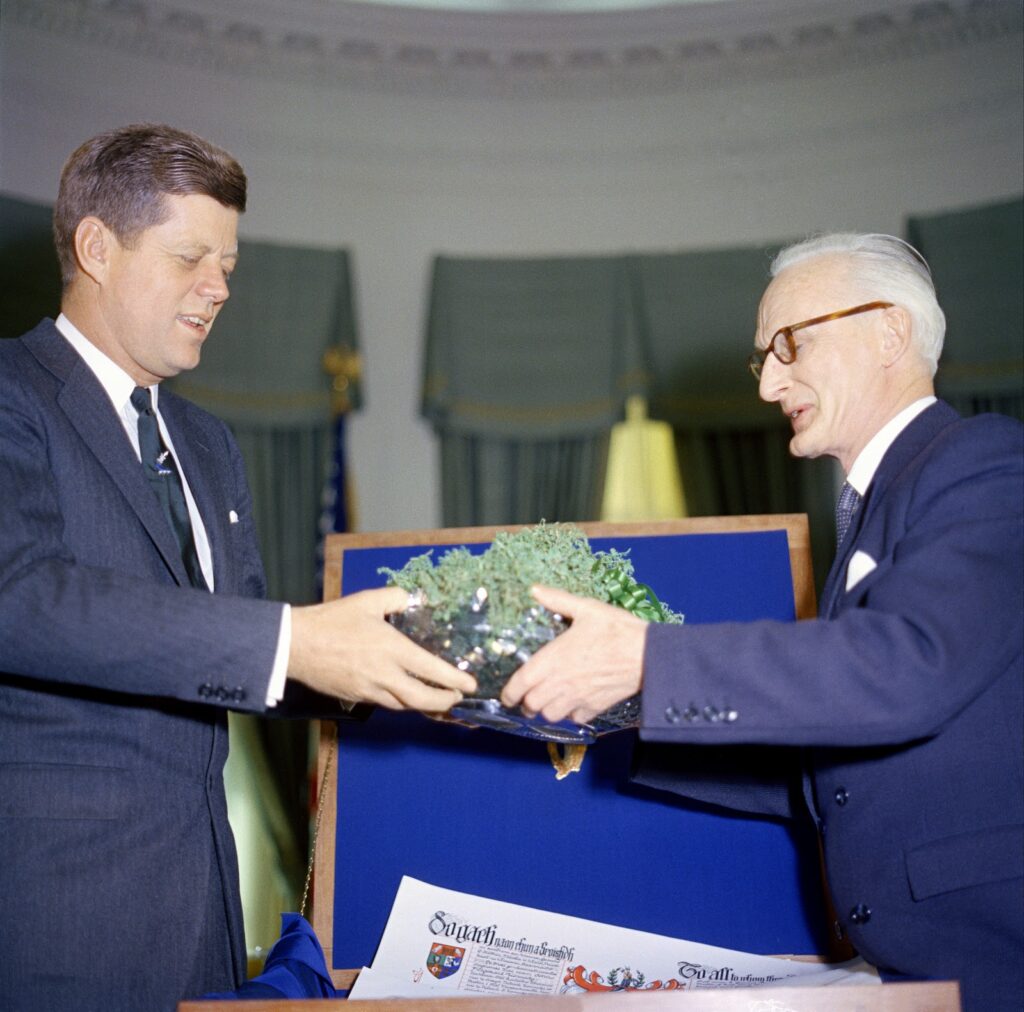
from Irish Ambassador Thomas Kiernan
Perhaps the most resonant moment in the tradition’s history came in 1961, when Ambassador Thomas Kiernan presented a bowl to President John F. Kennedy.
Kennedy was the first Catholic President of the United States, a man whose great-grandparents had left County Wexford during the Famine.
When he accepted those shamrocks, he was, in a very real sense, holding a piece of the country his family had left behind.
The photographs from that day carry a particular kind of weight.
The tradition has continued unbroken ever since — a small, annual reminder that the bond between Ireland and its diaspora is not merely sentimental. It is living, diplomatic, and genuinely felt on both sides.
The Luck, the Lore, and Something Older Still
People sometimes conflate the shamrock with luck, borrowing the associations more properly belonging to the four-leaf clover.
But the shamrock’s relationship with fortune and mystery runs through a different, deeper channel.
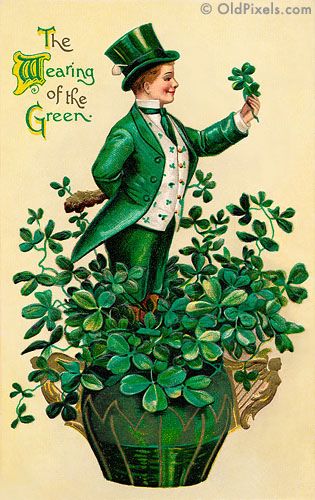
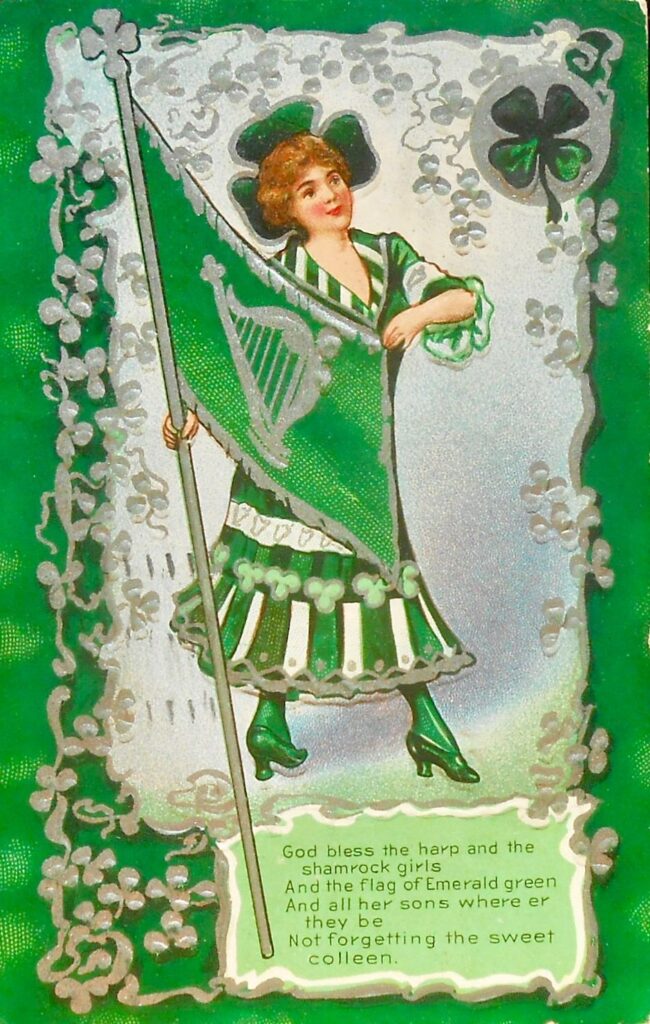
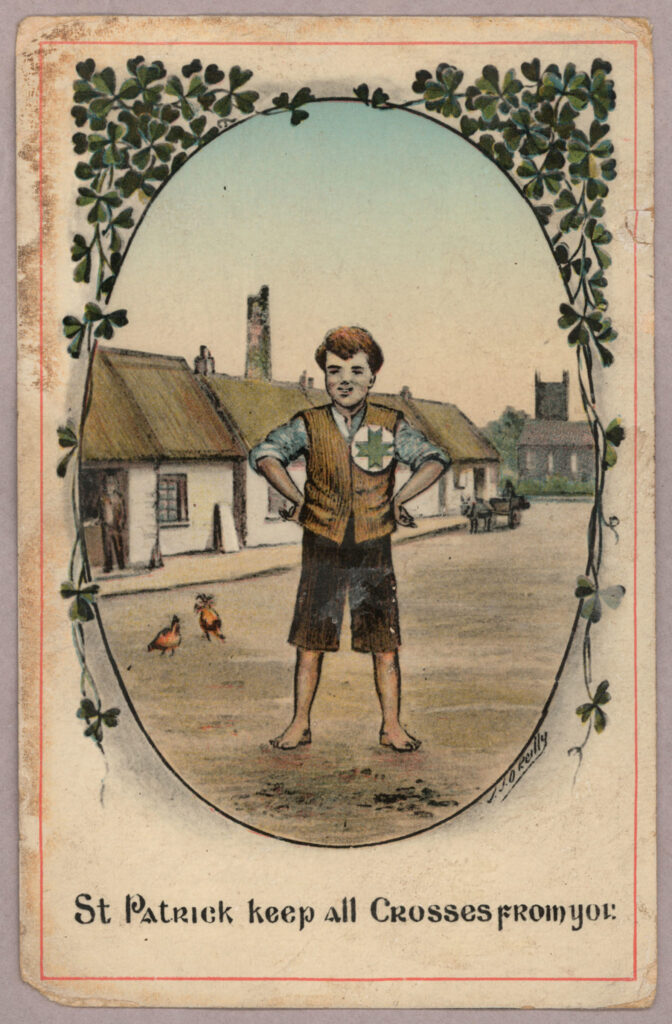
Celtic folklore was rich with the significance of three.
Triple goddesses, triadic riddles, the threefold nature of the world — these were not decorative flourishes but serious frameworks for understanding existence.
The shamrock, with its three equal leaves growing from a single point, embodied that principle in visible, tangible form.
When Christianity arrived in Ireland, it didn’t erase this older sensibility — it absorbed it.
The early Irish church was famously distinctive, blending Christian theology with Celtic spirituality in ways that made Rome occasionally uneasy.
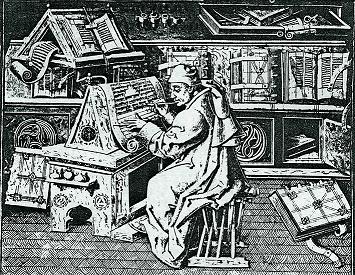
Irish monks illuminated manuscripts with intricate knotwork patterns that spoke simultaneously of Christian devotion and pre-Christian cosmology.
The shamrock sat comfortably within that tradition — a plant that could mean Trinity and triad, Patrick and the druids, the new faith and the ancient world, all at once.
That layered quality is, perhaps, the deepest source of its power.
It doesn’t mean just one thing.
It never has.
In Closing
The four-leaf clover promises rare luck — something stumbled upon by chance, a gift from fortune.
The shamrock is something different altogether.
Its power was never in rarity or accident.
It was always in meaning — meaning that has been added to, layer by layer, across fifteen centuries.
It began as a wildflower in a field, held up by a man trying to explain the inexplicable.
It became a badge of faith, then of defiance, then of national pride, then of a worldwide community bound together by shared roots.
It has been a teaching tool, a political symbol, a diplomatic gift, and a legal trademark.
And through all of it, it has remained exactly what it always was: a small, three-leafed plant, growing quietly in the Irish earth.
A reminder that resilience, connection, and a deep sense of home can grow from the simplest of things.
Lá Fhéile Pádraig Sona Daoibh.
Happy Saint Patrick’s Day.