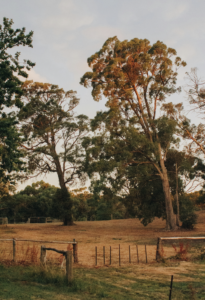
To me, síocháin is more than a word—it is a living essence, a gentle whisper carried on the wind across Ireland’s emerald hills, evoking a profound harmony that weaves together community, land, and the unseen realms.
It speaks of a deep, restorative calm, not merely the absence of strife, but an active, nurturing tranquillity that mends the soul and binds people to their ancient roots.
In the misty dawn over rolling green fields, or in the quiet resolve of neighbours coming together, the word síocháin feels like the heartbeat of Ireland itself—a fragile yet enduring peace worth guarding with care.
An Garda Síochána – The Guardians of the Peace
This cultural depth shines brightest in the name of our police force, An Garda Síochána, the “Guardians of the Peace.”
Founded in 1923 amid the ashes of civil war and the birth of the Irish Free State, the choice of this name was no accident.
Emerging from centuries of colonial rule and the violent struggles for independence, the new state sought to redefine authority.
Rather than inheriting the militarised legacy of the Royal Irish Constabulary, the founders envisioned a civilian force rooted in community trust.
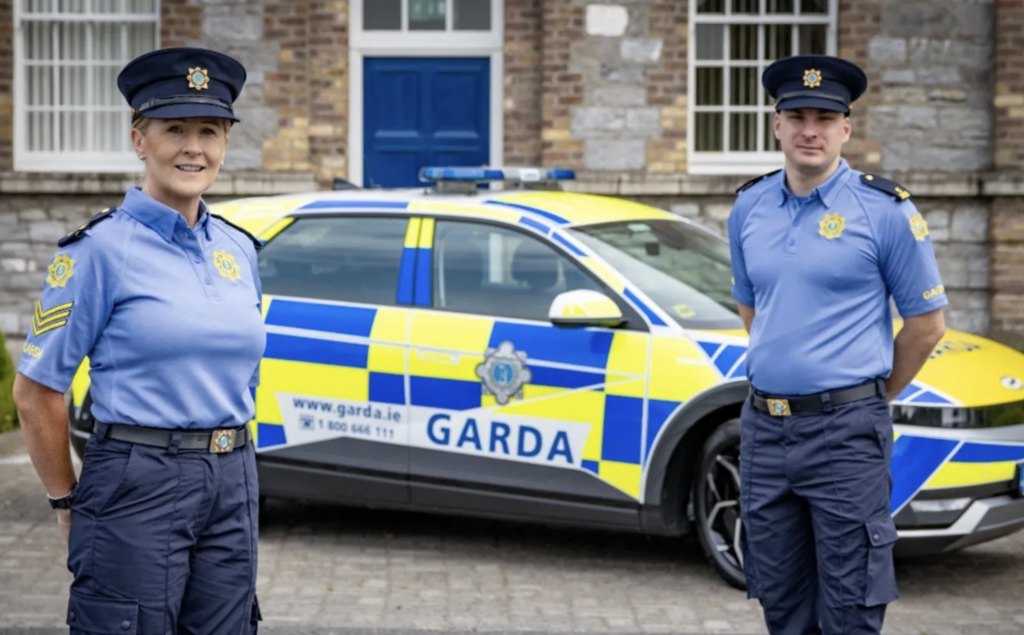
The Gardaí were established as unarmed in everyday duties—a bold symbol of peacekeeping over domination.
Picture a Garda officer back in the day, wearing the traditional blue uniform, patrolling a rural village on foot or bicycle, known personally to locals, resolving disputes with dialogue before force. Letting a drunk ‘sleep it off’ in the cells without charging them. A friendly neighbourhood Garda.
You’ll see members of An Garda Síochána in their capacity as “peacekeepers” at festivals or events. The uniformed Gardaí (plural of Garda) are seemingly instructed not to arrest, leave that to the undercovers and drug squad (who are there too).
The punters can sense this and trust that they are safe, and often approach the uniformed Gardaí in a playful and jovial manner.
And you can tell that the Gardaí are enjoying themselves too.
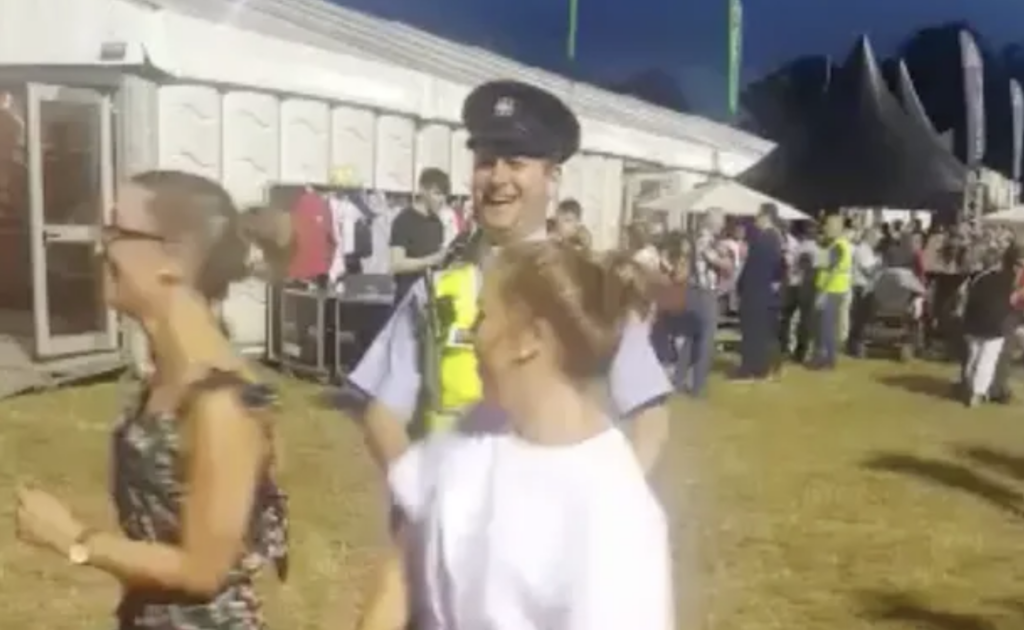
This approach fosters a unique bond: the Garda as protectors of harmony, not imposers of order.
At least, that was the idea.
Policy Enforcers
This stands in stark contrast to the word “police” used in many other countries.
Etymologically, “police” traces back through French to Latin politia, meaning civil administration, and ultimately to the Greek polis, the city-state—a centre of governance, policy, and regulated order.
It conjures images of structured enforcement: uniformed officers as agents of the state, maintaining control through laws and authority, often armed and hierarchical.
In places like the United States or Britain, policing can evoke a sense of top-down regulation, policy enforcers upholding the machinery of the metropolis.
The dichotomy is profound: one rooted in ethereal, communal peace (síocháin), the other in urban policy and power (polis).
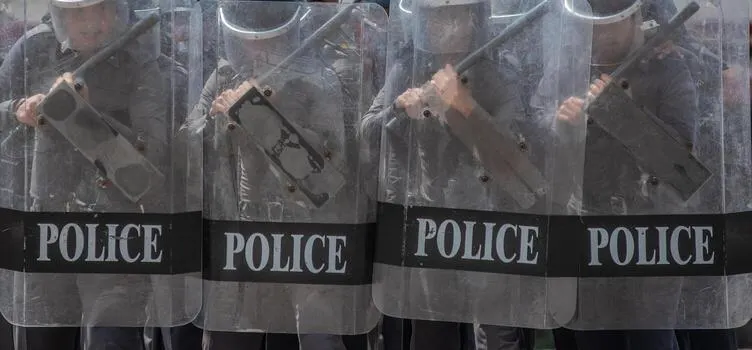
Ireland’s choice reflects a rejection of imperial coercion, aspiring instead to guardianship—a peace preserved through empathy and presence, like a shepherd watching over the flock rather than a ruler dictating from afar.
Alas, it seems that An Garda Síochána have strayed quite far from its intended purpose as “Guardians of the Peace”, behaving more as policy enforcers and strong-armed yes-men for the Irish State.
Away With the Fairies?
Yet the word síocháin delves even deeper into Ireland’s mystical soul.
Its etymology, from Old Irish síth (peace), shares a homonymous root with síd—the ancient fairy mounds, those grassy, ringed hills dotting the landscape like portals to another world.
Linguistic sources (such as eDIL) trace both words back to Proto-Celtic sīdos, ultimately from Indo-European sed– (“to sit”), where the “mound” sense relates to a “settlement” or “abode,” and the “peace” sense to a calm “settled” state.
This shared deep root explains the homonymy and why the fairies are euphemistically called “people of peace” (daoine síth / Aos Sí) in folklore—to avoid offending them by invoking their tranquil, otherworldly nature.
These síthe (plural) are the homes of the Aos Sí, the “people of the mounds,” supernatural beings descended from the Tuatha Dé Danann, the god-like race from Irish mythology who retreated underground after being defeated by mortal invaders.
Imagine standing before one such mound on a fog-shrouded morning: a lush, circular hillfort crowned with hawthorn trees, untouched by plough or spade for fear of disturbing the Fair Folk.
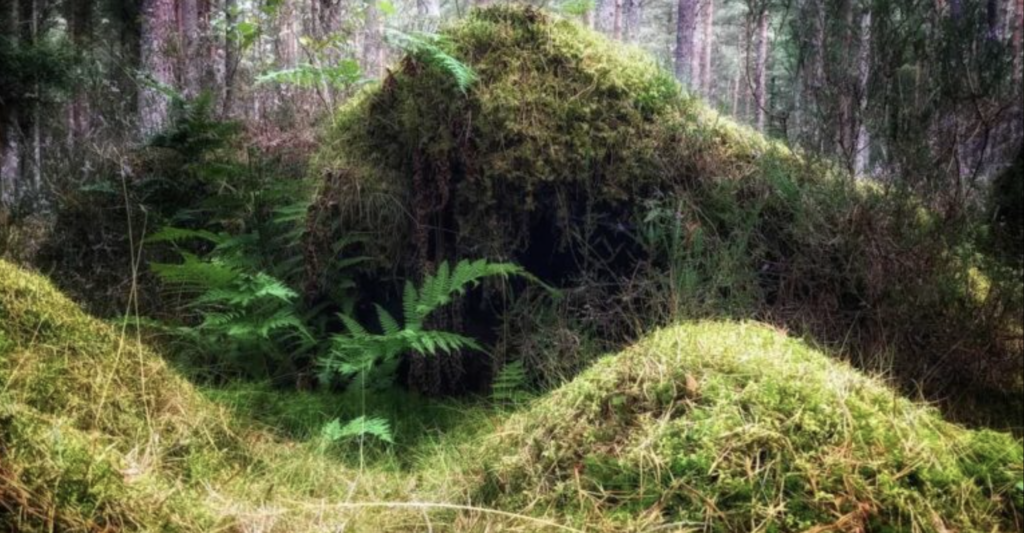
The air hums with ancient energy; wildflowers bloom in perfect rings, and the wind seems to carry faint music from within.
The Aos Sí inhabit a timeless Otherworld of eternal beauty—feasts that never end, music that enchants the heart, landscapes of perpetual youth and splendour.
But this paradise is double-edged.
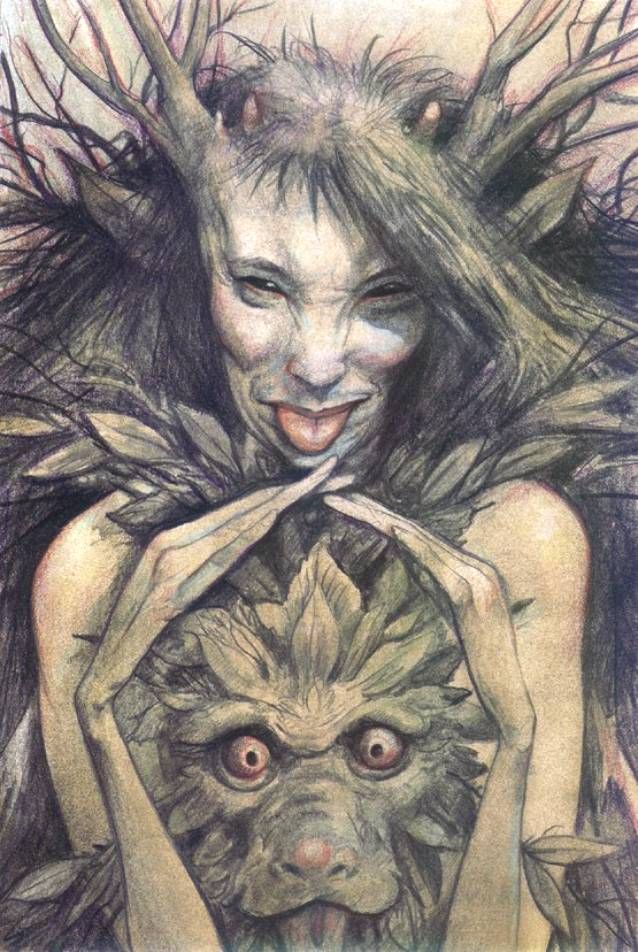
Folklore brims with tales of mortals lured by their seductive strains: a lone traveller hearing ethereal pipes on a moonlit road, stepping into a fairy ring, and dancing away into oblivion.
Time warps cruelly there—what feels like a night of revelry might span years in our world. Returnees emerge aged, mad, or forever changed, babbling of palaces beneath the hills.
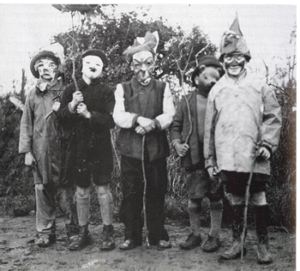
Worse are the abductions: healthy children or beautiful young adults stolen, often replaced by changelings—wan, fretful impostors with unnatural appetites or eerie wisdom.
These stories instilled deep fears; parents dressed boys as girls to fool the fairies, placed iron charms in cradles, or avoided naming the Sidhe directly, calling them as “the Gentle Folk” or “the Good People” (na Daoine Mhaithe) to avert offence.
Disturbing a síd—cutting a fairy tree or building on a mound—invited calamity: illness, misfortune, or the dreaded “fairy stroke.”
Even today, roads have been rerouted around sacred hawthorns, and farmers leave corners of fields wild.
This reverence underscores a worldview where peace (síth) demands respect for the unseen, a delicate balance between the seen and the unseen worlds.
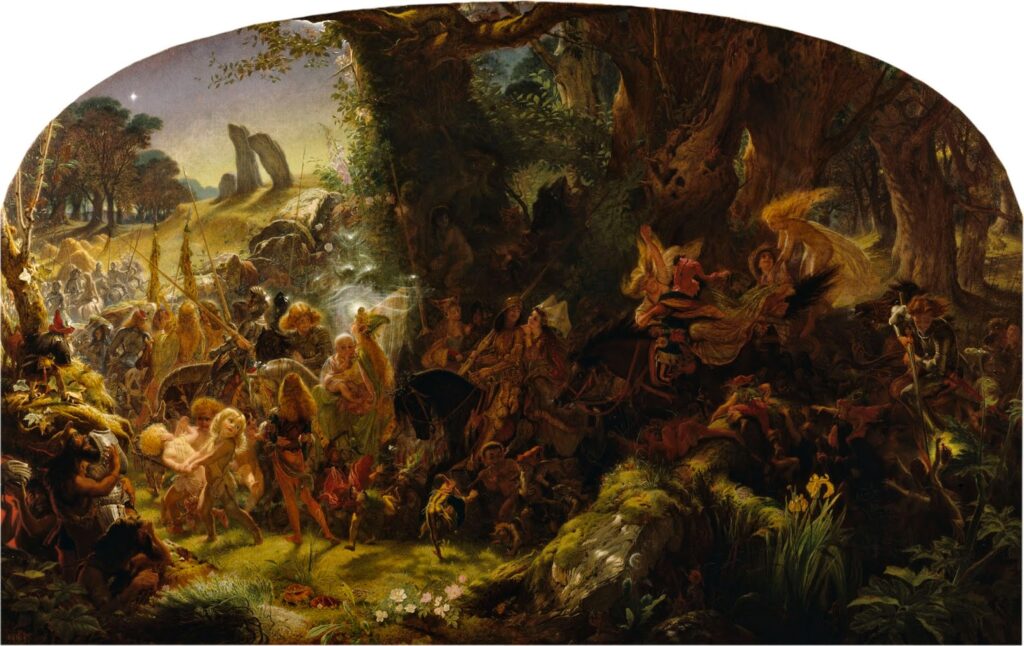
True síocháin is not imposed; it is nurtured, guarded against disruption, much like the Gardaí duty to protect and uphold societal harmony.
For me, síocháin bridges these realms:
the tangible peace of community and law,
and the mystical harmony of the land’s hidden depths.
In a world often fractured by conflict, it reminds us all to be guardians.
Guardians of each other, of nature, of the ancient whispers in the wind.
It calls for a peace that is profound, respectful, and alive, echoing from fairy mounds to village streets, eternal as Ireland’s mist-veiled hills.
Sources and Further Reading:
Etymology of síocháin, síth, and síd
- Electronic Dictionary of the Irish Language (eDIL). Royal Irish Academy, 2019 revision.
Accessed at https://dil.ie/37441 on January 6, 2026. - MacBain, Alexander. An Etymological Dictionary of the Gaelic Language. Revised edition, 1911.
History of An Garda Síochána
- Allen, Gregory. The Garda Síochána: Policing Independent Ireland 1922–82. Gill & Macmillan, 1999.
- Brady, Conor. Guardians of the Peace: The Early Years of the Irish Police Force. New Island Books, 2022.
Irish Mythology and Folklore (Aos Sí / Tuatha Dé Danann)
- The Journal, Double Take: The fairy bush in Co Clare that moved a motorway “Never shift a fairy bush.”
Accessed at: https://www.thejournal.ie/fairy-bush-co-clare-4604485-Apr2019/ on January 6, 2026. - Gantz, Jeffrey (trans.). Early Irish Myths and Sagas. Penguin Classics, 1981.
- Gray, Elizabeth A. (ed.). Cath Maige Tuired: The Second Battle of Mag Tuired. Irish Texts Society, 1982.
- Ó hÓgáin, Dáithí. The Lore of Ireland: An Encyclopaedia of Myth, Legend and Romance. Boydell Press, 2006.