Ballyvadhea, County Tipperary – March 1895
Retold by Kevin Flanagan on 31 October 2025
In 1895, gripped by paranoia and fear, Michael Cleary and his accomplices would burn Michael’s wife, Bridget, alive.
Remarkably, the defence of delusion was accepted, and Michael would be convicted of manslaughter, not murder, because he really believed he was exorcising a fairy. What follows is a tragic account of what has come to be called “the last witch burning in Ireland” that offers a rare glimpse into the mindset of the peasantry at the time.
I. The Cottage and the Couple
The cottage stood low and whitewashed on the slope above Ballyvadlea (now Ballyvadhea), a single-storey labourer’s dwelling with a thatched roof, earthen floor, and a hearth that never quite warmed the back room. Two small windows faced the boreen; a half-door let in the perpetual smell of turf smoke and wet fields. Inside: a settle-bed, a deal table, two stools, a dresser with willow-pattern plates, and a crucifix above the mantel.
Bridget Cleary, née Boland, aged twenty-six or twenty-seven (records differ), had lived there eight years. She was slight, dark-haired, quick-eyed, and known for three things:
- Her skill as a dressmaker—she supplied fashionable gowns to the gentry in Clonmel and Fethard.
- Her childlessness—unusual in a district where women bore a child a year.
- Her sharp tongue—she answered back, kept her own purse, and rode a bicycle, all of which marked her as “not like the rest.”
Michael Cleary, thirty-five, was a cooper—barrel-maker—employed at Clonmel’s butter factory. Tall, broad-shouldered, devout in his fashion, he attended Mass yet carried a deeper faith in the pishogues his mother had taught him.
Family lore insisted she had once “gone with the fairies” for three days and returned speaking in riddles. Michael kept iron nails in his pockets and never passed the Kylenagranagh rath after dark without spitting thrice.
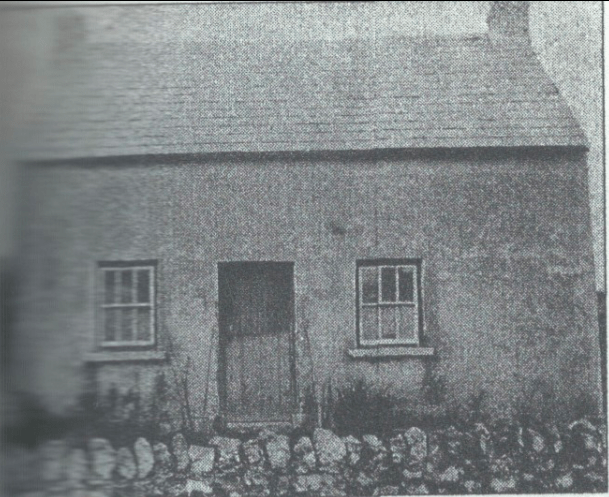
The Cleary Cottage in 1895
(Source- National Archive of Ireland)
They had no children, but neighbours said Michael doted on Bridget—until the whispers began. A local man, William Simpson, had been seen lingering at the half-door. Michael’s pride curdled into obsession.
II. Changeling Folklore: The Fear Behind the Flame
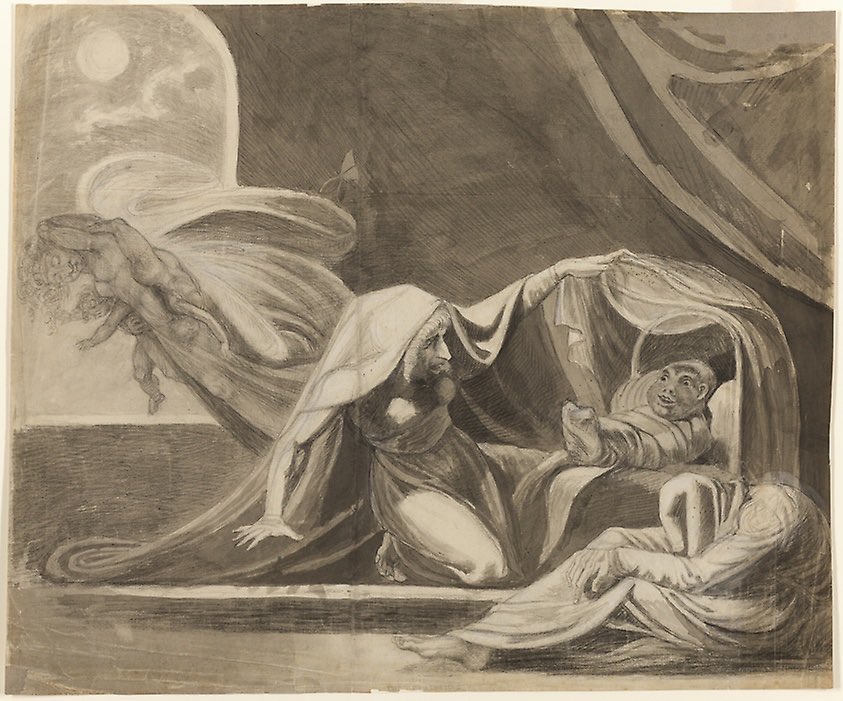
Of all the beings that haunt Irish imagination, none inspired greater dread than the changeling—a faerie impostor slipped into a cradle in place of a stolen human child. The motives ascribed to the Sidhe were as cruel as they were capricious.
Faerie births, the stories went, were rare and often tragic.
A deformed or sickly faerie infant would be cast out without ceremony, for the Good People prized beauty above all else.
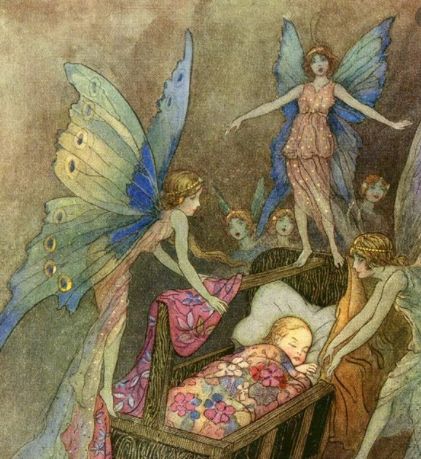
To replace it, they coveted healthy, handsome mortal babies, spirited away to the glittering halls beneath the raths. In the empty cradle, they left either the ailing faerie child or a glamoured stock of wood—a “fetch”—which would wither and die within days, leaving grieving parents none the wiser.
A true changeling who survived infancy revealed itself quickly: voracious, ill-tempered, cold-eyed, and impossible to soothe.
It drank milk by the gallon yet never thrived; its cries pierced the night like knives. Worse, it drained the household of joy—crops failed, cattle sickened, laughter fled.
Families cursed with a changeling knew only misfortune until the creature was driven out, usually by fire, iron, or ordeal.
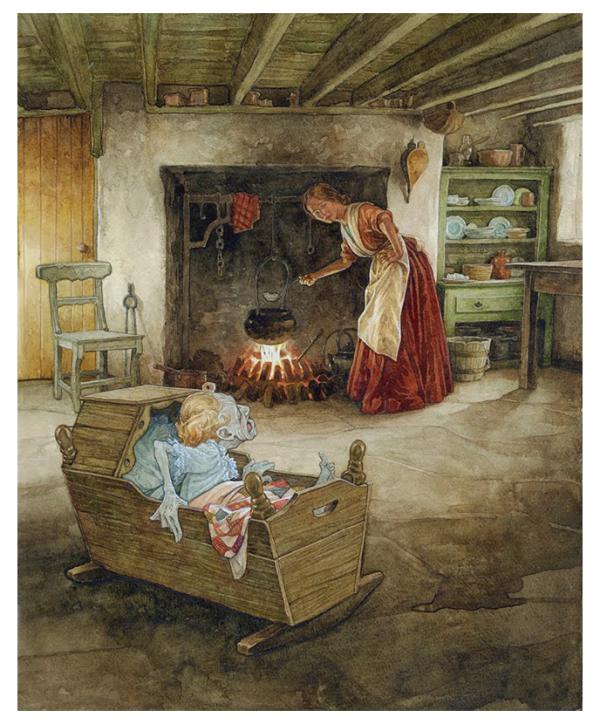
Adult changelings were spoken of in hushed tones—rarer, subtler, deadlier.
A wife who grew sharp-tongued after years of meekness, a husband who returned from the fields speaking strangely: these were the marks.
Michael Cleary convinced himself that his wife, Bridget, had been taken and a faerie substitute now wore her face. The thought was not madness in 1895 Tipperary; it was folk theology, as real as the Mass.
This very real fear was captured by W.B. Yeats in his famous poem:
The Stolen Child
Where dips the rocky highland
Of Sleuth Wood in the lake,
There lies a leafy island
Where flapping herons wake
The drowsy water rats;
There we’ve hid our faery vats,
Full of berrys
And of reddest stolen cherries.
Come away, O human child!
To the waters and the wild
With a faery, hand in hand,
For the world’s more full of weeping than you can understand.Where the wave of moonlight glosses
The dim gray sands with light,
Far off by furthest Rosses
We foot it all the night,
Weaving olden dances
Mingling hands and mingling glances
Till the moon has taken flight;
To and fro we leap
And chase the frothy bubbles,
While the world is full of troubles
And anxious in its sleep.
Come away, O human child!
To the waters and the wild
With a faery, hand in hand,
For the world’s more full of weeping than you can understand.Where the wandering water gushes
From the hills above Glen-Car,
In pools among the rushes
That scarce could bathe a star,
We seek for slumbering trout
And whispering in their ears
Give them unquiet dreams;
Leaning softly out
From ferns that drop their tears
Over the young streams.
Come away, O human child!
To the waters and the wild
With a faery, hand in hand,
For the world’s more full of weeping than you can understand.Away with us he’s going,
The solemn-eyed:
He’ll hear no more the lowing
Of the calves on the warm hillside
Or the kettle on the hob
Sing peace into his breast,
Or see the brown mice bob
Round and round the oatmeal chest.
For he comes, the human child,
To the waters and the wild
With a faery, hand in hand,
For the world’s more full of weeping than he can understand.– W.B. Yeats.
III. Early March – The Illness
Bridget took to her bed around 4 March with a racking cough, night sweats, and shivering fits. Dr Matthew Crean of Fethard diagnosed “bronchitis with nervous excitement”—code, in 1895, for anything from pneumonia to hysteria. He prescribed rest, laudanum, and beef tea.
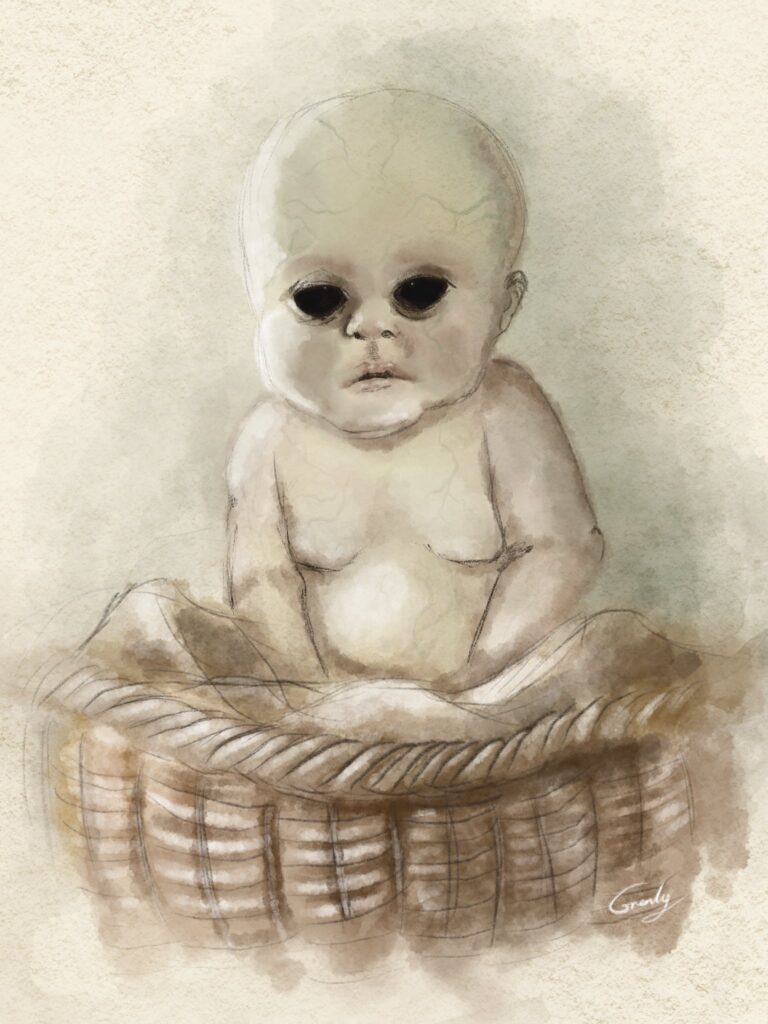
Michael heard none of it.
To him, the cough was “fairy blast”; the staring eyes were proof the Sidhe had “taken the real Bridget” and left a changeling in her place.
He sent for Denis Ganey, a travelling “fairy doctor” who sold charms from a canvas bag.
Ganey arrived on 7 March with a dark bottle of herbs—foxglove, vervain, and St. John’s wort steeped in poitín—and a list of instructions:
- Burn rowan above the bed.
- Sprinkle holy water mixed with salt at every threshold.
- Force the patient to drink the potion three times daily “until the fairy speaks.”
IV. 13 March – First Rites
Wednesday.
Father Michael Ryan, parish priest of Drangan, came at Michael’s urgent summons.
Bridget, feverish but lucid, confessed and received Extreme Unction.
Michael watched the priest’s lips move and saw confirmation: If the fairies have her, the sacraments will drive them out.
That evening, the first dose of Ganey’s brew was forced between Bridget’s teeth. She retched, grew “wild and demented”, and began muttering to the wall: “Leave me alone… leave me…”
V. 14th March – The Night of the Holding
Thursday, 9:30 p.m. The cottage served as a foreshadowing of the court trials that would soon come.
- Patrick Boland, Bridget’s father, 70, frail, bewildered.
- John Dunne, neighbour, 50, a known believer in banshees.
- Patrick Kennedy, cousin, 40, labourer.
- James Kennedy, 38, strong as an ox.
- Michael Kennedy, 35, is quieter.
- William Kennedy, 17, the youngest cousin.
- Mary Kennedy, aunt, 55, rosary beads clicking.
- William Ahearn, 15, neighbour’s son, sent to “help.”
- Johannah Burke, 30, Michael’s cousin by marriage, is practical, already nursing Bridget for days.
Michael stood at the bedfoot, eyes blazing.
“We’ll have the truth tonight. Are you Bridget Boland, my lawful wife?”
They stripped the blankets. Bridget, in a long linen chemise, fought like a cat. Four men pinned her wrists and ankles to the iron bedstead.
Johannah tried to intervene—“She’s burning up!”—but Michael pushed her aside.
Force-feeding began. Ganey’s potion, now mixed with new milk, was poured from a tin saucepan. When Bridget clamped her mouth, John Dunne slapped her hands; James Kennedy pinched her nose.
The liquid ran down her chin, soaking the pillow. This went on for fifteen to twenty minutes. She gagged, coughed, and finally swallowed.
Still, Michael pressed:
“Say the words! Are you Bridget Boland, wife of Michael Cleary, in the name of God?”
Silence.
Then a scream.
Dunne growled:
“The fire will make her speak.”
They lifted her bodily—four men, two at the shoulders, two at the ankles—and carried her to the hearth. The turf fire was low but glowing. For ten full minutes, they held her six inches above the embers. The heat blistered her left hip, right side of her neck, and forehead. A poker may have been used; witnesses later disagreed. Bridget’s chemise smoked but did not ignite.
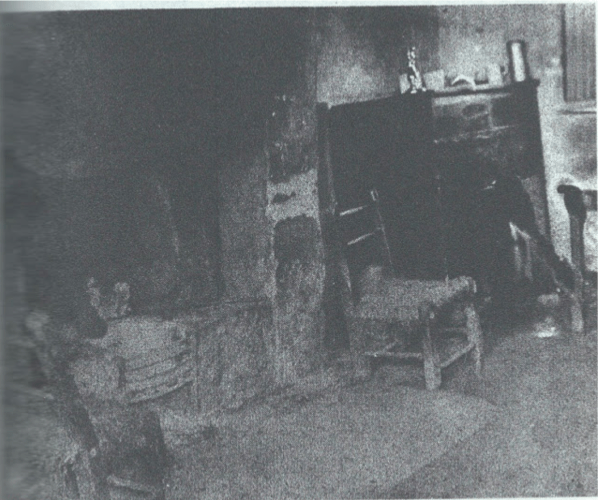
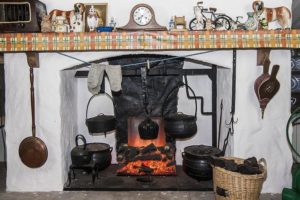
“The Cleary’s Kitchen”
(Source: National Archives of Ireland)
At last, hoarse and broken:
“I am Bridget Boland… your wife…”
They laid her back, half-conscious, and dressed her in a clean chemise. Michael locked the door with a wooden bar. No one would leave before midnight—the witching hour—lest the fairies return to claim their own.
The group sat in near-silence. Dunne and Ahearn slipped out at 2 a.m. The Kennedys left for a wake. The rest dozed on chairs and the floor.
VI. 15th March – Morning Mass and Evening Inferno
On Friday at 8 a.m., Father Ryan returned for Mass in the cottage. Bridget, propped on pillows, received Holy Communion. She whispered responses but seemed “nervous and incoherent”. Michael took this as proof that the changeling still lingered.
By 6 p.m., she was dressed in a dark skirt and bodice, sitting by the fire. Neighbours Patrick Tobin and Michael Smith called to settle a dispute over a shilling or spilt milk—accounts vary. Bridget, voice weak, insisted she had used no pishogues.
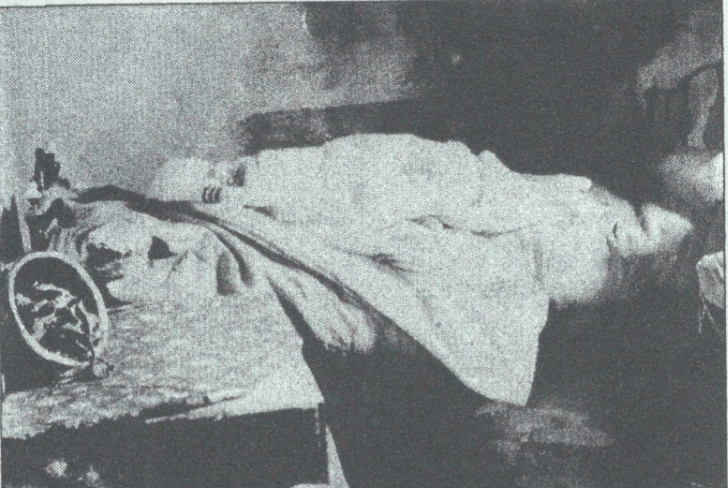
“The Cleary’s Bedroom”
(Source: National Archives of Ireland)
Johannah brewed tea. Michael produced three slices of bread thick with jam.
“Eat every crumb. Then say your name.”
Bridget managed two. When she turned from the third, Michael seized her wrist, forced the bread into her mouth, and shoved. She choked. He flung her backwards. Her head struck the flagstones with a crack that silenced the room.He knelt on her chest, hand at her throat, and ripped away her bodice and skirt, leaving her in the chemise. From the fire he drew a red-hot poker and held it an inch from her lips.
“Say it! Or I’ll brand the fairy out of you!”
Johannah screamed:
“Michael, you’ll kill her!”
He bolted the door.
Three times he splashed lamp oil from a tin canister—across her torso, thighs, the hem of the chemise. The room reeked of paraffin.
The chemise ignited with a whoosh. Flames leapt to the low ceiling.
Bridget’s scream:
“Oh Han, Han!”
was cut short as her hair caught.
Michael stepped back, arms wide:
“It’s not Bridget! Watch her go up the chimney like a fairy!”
The fire roared. Flesh sizzled. The body contracted into a foetal curl on the sheet Johannah had laid to protect the floor. Within ninety seconds, the screaming stopped.
VII. The Burial
Michael and Patrick Kennedy waited until the embers died. They wrapped the remains in the scorched sheet and a coarse sack, carried the bundle 105 yards down the boreen, and dug a shallow grave in a drainage dyke with a spade and shovel. The earth was soft from rain; the hole was barely two feet deep.
They returned at 11 p.m., locked the others inside, and drew a knife across each throat in oath:
“Speak of this and you’ll follow her.”
Michael spent an hour scrubbing blood and grease from the flagstones with lye soap and a heather brush.
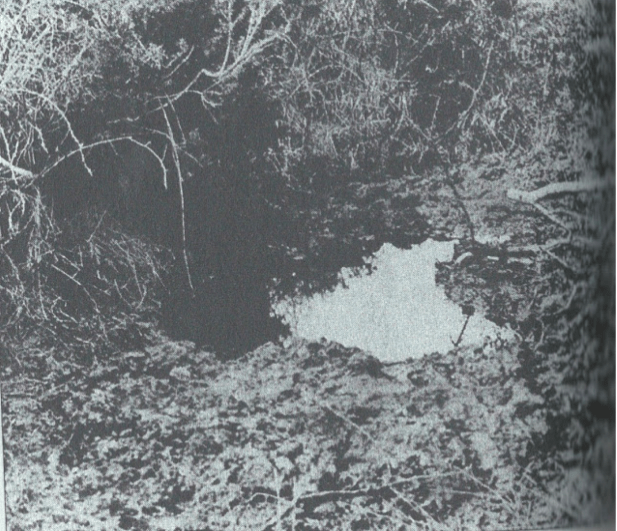
“Approximate Location of Bridget’s Shallow Grave”
(Source: National Archives of Ireland)
VIII. 16th–21st March – The Fairy Watch
Michael concocted a tale: Bridget had “gone off at midnight in her nightdress” to the fairy fort. Neighbours searched fields and ditches by day.
Every night, Michael rode to Kylenagranagh Rath (a fairy fort)—a prehistoric ringfort overgrown with hawthorn—carrying a revolver and a clasp knife. He believed the fairies would return Bridget on a grey horse at the full moon.
He would cut the fairy ropes and reclaim his wife.
“I’ll have her back,”
He told the empty air,
“or I’ll burn the hill itself.”
No horse came.
Michael Cleary was alleged to have placed the blame on one Jack Dunne, a local storyteller, who put it in Michael’s head that Bridget was, in fact, a fairy when he returned from the fairy fort shouting:
“She’s burned now, and God knows I would never have one it only for Jack Dunne. It was he who told me my wife was a fairy.”
IX. 22 March – Discovery
By the morning of 22 March, suspicion had crystallised. Michael’s story of Bridget wandering off in her nightdress strained credulity—March nights were bitter, and she had been too weak to walk.
Constable John Egan of the Royal Irish Constabulary, stationed in Drangan, organised a formal search party of twelve local men, including Patrick Tobin and Thomas Smyth. They began at dawn, combing the boreens, hedgerows, and the Kylenagranagh rath itself.
Egan noticed fresh bootprints in the soft mud leading from the Cleary cottage to a drainage dyke 105 yards away, partially hidden by furze bushes. The prints matched Michael’s hobnailed boots. Shovels were fetched. Within minutes, the earth gave way to a foul stench.
They uncovered:
- A charred torso, the skin split and blackened, ribs protruding like the ribs of a burnt-out grate.
- Abdomen and thighs reduced to calcined bone, flesh sloughed away in sheets.
- Internal organs—liver, intestines, uterus—protruding through the abdominal cavity, blackened yet recognisable, “like dark fruit left too long in the sun.”
- Hands and fingers contracted into rigid claws, the nails split from heat.
- Legs burned to stumps below the knees; feet entirely gone.
- Face miraculously untouched below the hairline—Bridget’s features recognisable, eyes half-open, mouth slightly agape, expression oddly serene, as though she had simply fallen asleep amid the horror.
The sheet and sack were singed but intact, bearing the monogram “B.C.” in Bridget’s own stitching. A crowd gathered; women wept, men crossed themselves. The body was carried on a hurdle to the Cleary barn for an inquest.
Michael, confronted, muttered only:
“That’s not her. The real Bridget is riding with the fairies.”
X. Post-Mortem: 23rd March
The inquest opened at 10 a.m. on 23 March in a makeshift courtroom in the barn, presided over by Coroner Mr. Richard J. McGrath. Drs Matthew Crean (Bridget’s own physician) and Thomas Heffernan (police surgeon) performed the autopsy on a trestle table before a jury of local farmers, many of whom had known Bridget since childhood.
Their findings, delivered in clipped medical Latin and translated for the jury, were meticulous:
- Burns: 95 % of the torso and lower limbs, classified as fourth-degree—not merely skin and muscle, but bone calcined to ash-grey fragility. The pelvis was fractured from heat contraction; femurs splintered.
- Brain: Congested with petechial haemorrhages—tiny blood leaks from shock; no skull fracture beyond the scalp wound.
- Lungs: Congested and blackened with soot inhalation, indicating Bridget had breathed flame for at least 30–60 seconds before death.
- Spleen: Ruptured, but the tear was post-mortem, caused by the body’s violent curling in the fire.
- Stomach: Contained partially digested bread and jam (the forced third slice), no trace of poison or herbal overdose.
- Scalp: Effusion of blood beneath the skin where her head struck the flagstones—a goose-egg swelling but no fracture.
- Neck: No ligature marks, no crush injuries—death was not by strangulation.
- Genitalia: Burned away, but no evidence of sexual assault.
Cause of death: Neurogenic shock induced by extensive burns; unconsciousness within one minute, death within three to five minutes of ignition.
The doctors stressed: Bridget was alive and conscious when set alight, and the bread in her stomach proved she had eaten mere hours before.
The jury returned:
“Wilful murder by persons unknown.”
XI. Arrests and Trial
Arrests began within hours.
By 1 April, eleven people were in Clonmel Gaol: Michael Cleary, the nine accomplices from the cottage, and Denis Ganey.
Ganey was discharged on 4 April—no evidence he had supplied anything beyond herbs, and he had not been present at the burning.
The trial opened on 3 July 1895 at Clonmel Assizes, a neoclassical courthouse packed with reporters from Dublin, London, and even New York. Presiding was Mr Justice William O’Brien, a stern Unionist who viewed the case as an indictment of rural “barbarism.” The public gallery overflowed; women fainted at Johannah Burke’s testimony.
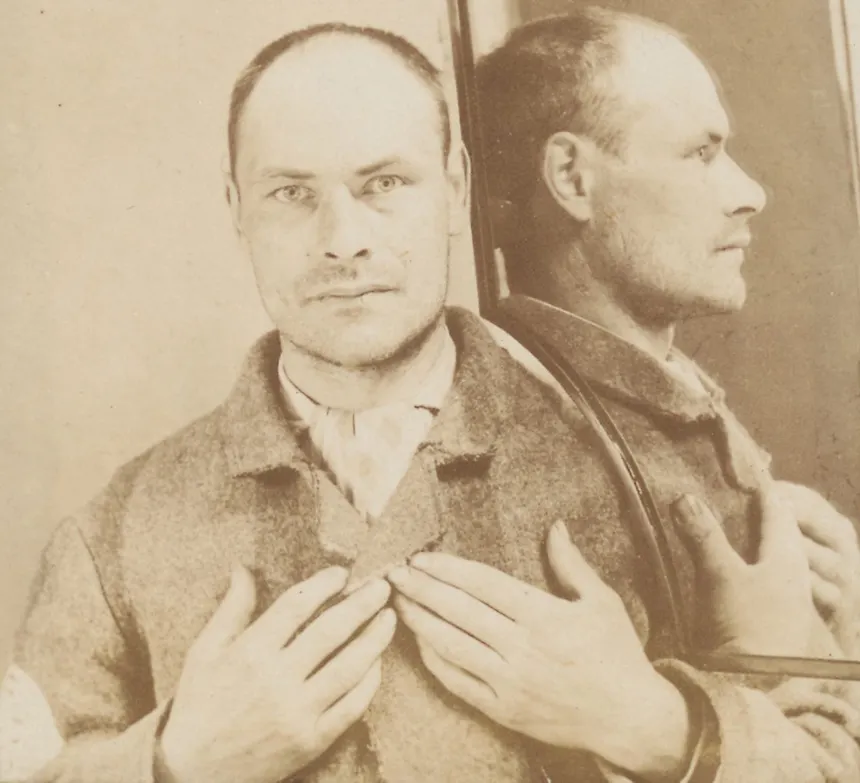
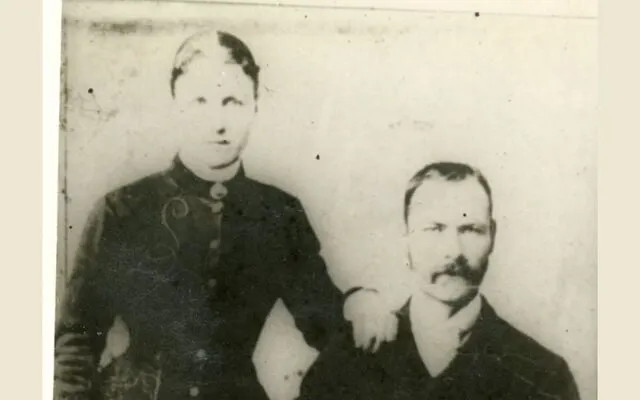
Prison Photo of Michael Cleary
Key evidence:
- Johannah Burke’s calm, detailed account—she wept only when describing Bridget’s final cry.
- Physical evidence: The monogrammed sheet, lamp-oil canister, and charred poker.
- Medical testimony: The doctors’ assertion that superstition did not negate intent.
Defence (led by Sergeant Patrick J. Kelly) argued “temporary delusion”—Michael genuinely believed he was exorcising a fairy.
The jury, after three hours, convicted of manslaughter rather than murder, accepting the plea of insane belief.
Sentences: 5th of July
- Michael Cleary: 20 years penal servitude (served at Maryborough, now Portlaoise; released 1910).
- Patrick Kennedy: 5 years (burial accomplice).
- John Dunne: 3 years (suggested fire).
- James & William Kennedy: 18 months hard labour each (held Bridget over fire).
- Michael Kennedy: 6 months (lesser role).
- Mary Kennedy & William Ahearn: Discharged (peripheral).
- Patrick Boland: Released (elderly, coerced by grief).
That night, neighbours torched the Cleary cottage with paraffin and turf.
By morning, only the stone gable ends remained, blackened sentinels against the sky.
The site is now a sheep pasture, but locals still avert their eyes when passing.
XII. Conclusion
Bridget Cleary was no changeling.
She was a woman with bronchitis, a modern mind, and a husband whose love turned to terror under the weight of ancestral fear.
In an Ireland still gripped by famine’s long shadow, where the Great Hunger had ended less than fifty years earlier, superstition was not mere fancy—it was survival.
The fairy faith offered an explanation when science failed, control when life spun away.
Michael Cleary, like many, lived in two worlds: the Catholic chapel on Sunday, the fairy faith rath on moonlit nights.
The Sidhe never stole her.
Michael Cleary handed her to the flames—and called it salvation.
Yet the tragedy rippled far beyond Ballyvadlea. The case became a global sensation, splashed across The Times, New York Herald, and Freeman’s Journal as “Ireland’s Witch-Burning.”
It fuelled British propaganda depicting the Irish as backward, justifying continued rule.
At home, it spurred folklorists like Lady Gregory and W.B. Yeats to collect fairy tales with new urgency, fearing the old ways were dying—or worse yet, killing.
Bridget’s unmarked grave in Cloneen churchyard went neglected for over a century.
In 2024, a simple stone was finally placed:
“Bridget Cleary, 1869–1895. Murdered by Superstition.”
Her story endures as a warning: belief unchecked becomes a blade, and the most dangerous fairy is the one we conjure in our own hearts and minds.
A famous nursery rhyme from the time goes:
“Are you a witch or are you a fairy?
Or are you the wife of Michael Cleary?”
Here is a video I made many moons ago that talks about this case in very brief detail.
Sources and Further Reading
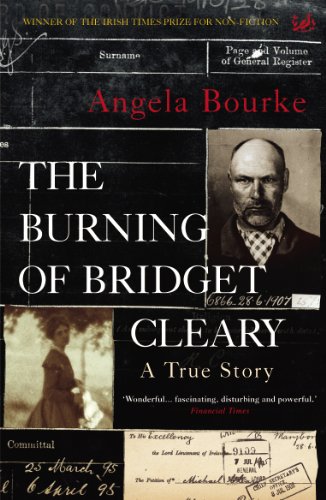
The Burning of Bridget Cleary, Angela Bourke, Pimlico, 1999
The Dark Spirit: Sinister Portraits from Celtic Folklore, Dr. Rob Curran, Cassell & Co, 2001
The Freeman’s Journal (Dublin) – 25 Mar to 6 Jul 1895
The Irish Times – 23 Mar 1895 & 4–6 Jul 1895
Irish Prison Registers – National Archives of Ireland (CSO/RP/1910/108)
→ Michael Cleary’s file & photo.
Clonmel Crown Court Minute Books, 1895 – NAI Ref: 1B/57/128