Daniel Corkery’s The Hidden Ireland opens up a Munster that most history books leave out entirely.
Published in 1924, the book is a study of the Irish-language poets who kept a native learned culture alive across Cork, Kerry, and Limerick through the eighteenth century, long after the formal Bardic schools of medieval Ireland had been destroyed. Corkery called this world hidden for a precise reason.
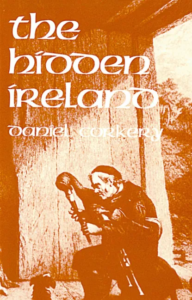
By Daniel Corkery
It had gone on existing in full view of the people who lived inside it, yet it was invisible to the history that got written down, since that history was written in English, by and for the class that had displaced the Gaelic order in the first place.
That is the real argument of the book, and it goes well beyond simply recovering a few forgotten poets. Corkery was making a claim about what counts as history at all.
The Ireland recorded in official documents, landlord correspondence, and parliamentary records was Anglo-Ireland, a world of planters, agents, and administrators.
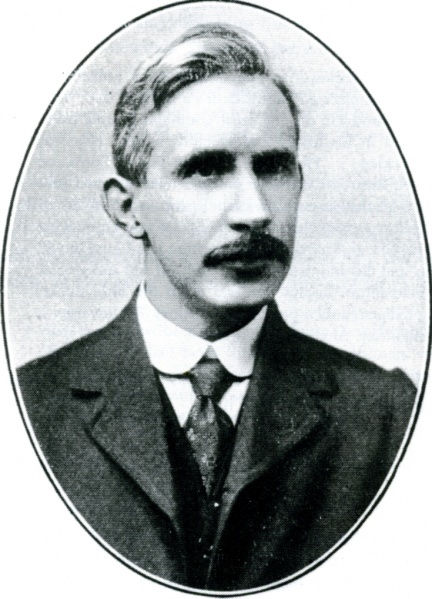
Teacher, Author, Cork man
Running alongside it, in the same countryside, was a Gaelic-speaking, Catholic, dispossessed Ireland with its own literature, its own social structure, and its own sense of continuity with a past stretching back centuries, and almost none of that had made it into the record.
Corkery set out to write that second Ireland back into existence using the one kind of evidence it had left behind in any quantity, its poetry.
The Courts of Poetry
The vehicle for that surviving culture was the court of poetry, an informal circle where working poets met, judged each other’s compositions, and kept the old metres and the old learning in circulation.
A court of poetry was not a building or an institution in any formal sense. It was a gathering, often in a farmhouse or a public house, where a recognised poet might sit in judgement over the work of others, correct their metre, and pass on technical knowledge that had once belonged to the great Bardic families under the patronage of Gaelic lords.
Sliabh Luachra, straddling the Cork and Kerry border, held one of the most active of these courts, and Corkery treats the area almost as a capital of this hidden literary world.
The poets who kept these courts running were, by any material measure, poor men. They farmed, they taught hedge school where they could find pupils, and some drifted into vagrancy when the harvest failed.
Yet within their own circle they held a status the outside world denied them entirely. A skilled poet could still command real respect among his own people, judged by standards of composition reaching back centuries, even while the Penal Laws stripped his community of land, office, and any formal claim to education.
This is the contradiction Corkery wanted his readers to sit with, a level of literary sophistication surviving inside conditions of near-total dispossession.
Aodhagán Ó Rathaille and the Fall of the Old Order
Aodhagán Ó Rathaille (Aiden O’Reilly) worked in this Kerry world in the early part of the eighteenth century, and his poetry carries the grief of a man watching an entire order disappear in real time. His aisling (vision) poems, in which a woman appears to the poet as a vision of Ireland herself, mourn the fall of the Gaelic lords who had once employed poets like him and warn that no one of comparable worth has risen to replace them.
Ó Rathaille had been connected to the MacCarthy lords of Kerry, and when their power was broken he was left without patronage, without status, and largely without means, a poet of real training reduced to the same poverty as the people around him.
That fall is the hinge of Corkery’s whole account.
Before it, a poet’s skill was still connected to real power, a lord who could reward him and a court that could employ him.
After it, the skill remained, but the structure holding it up was gone, and men like Ó Rathaille had to carry a Gaelic learned tradition forward with nothing behind them but their own memory and each other’s judgement.
Corkery reads this not as decline into irrelevance but as a culture finding a way to survive its own destruction, which is exactly the phenomenon he wanted the word “hidden” to capture.
Eoghan Rua Ó Súilleabháin and the Last of the Poets
Eoghan Rua Ó Súilleabháin (Owen Row O’Sullivan) carried that same tradition into the later part of the century, moving through Kerry, Cork, and Limerick as a wandering teacher and versifier, and he is generally reckoned among the last poets of real standing to work inside it.
He taught hedge school when he could get pupils, composed within the same courts of poetry that Ó Rathaille had known a generation earlier, and by most accounts lived exactly the itinerant, precarious life that had become normal for a poet by then.
He died in 1784, and with him went the last figure of genuine stature that this world would produce.
Corkery includes Ó Súilleabháin, along with poets like Seán Clárach Mac Domhnaill and Brian Merriman, to show that the culture did not end quietly or all at once. It kept producing work of real ambition right up until it had almost nobody left to sustain it, and that persistence against the odds is the heart of what he was trying to argue for.
What Corkery Was Reaching For
It’s worth being clear about what Corkery was and was not claiming.
He was not writing a neutral academic history, and he never pretended to be.
He was writing as a cultural nationalist in the years surrounding the founding of the Irish Free State, and his purpose was to give that new state a usable past, one in which the Gaelic order had not simply been destroyed but had continued, hidden, resourceful, and worthy of pride, right up until living memory.
He was reaching for continuity where the official record showed only rupture, and for dignity in a community the Anglo-Irish histories had mostly treated as background.
Among the families he places inside that surviving Gaelic world, Corkery even mentions the O’Connells of Derrynane, ancestors of the man who would become known as the Great Liberator, as part of the same Kerry landscape the courts of poetry moved through. He does not build an argument around them apart from illustrating the nature of the “big houses” that wore two masks. One for their English peers, and another one entirely for their Irish brethren. Corkery points out that it was the latter face that was part of this hidden Ireland.
It’s a passing note, one line placing a well-known Kerry family inside the world he is describing, and it is worth remembering mainly for what it shows: how tightly woven this hidden Ireland was into the ordinary life of the county, touching families whose later fame lay in entirely different directions.
The Debate Corkery Started
Corkery’s picture did not go unchallenged, and the challenge is part of the book’s legacy now.
In 1969, the historian Louis Cullen published a long reassessment arguing that Corkery had oversimplified the social world of the poets, painting a starker picture of universal poverty and dispossession than the evidence for individual poets actually supports. Cullen’s essay has become the standard counterweight to Corkery, read alongside the original almost as a matter of course, and it has pushed later historians toward a more varied, less uniform picture of who these poets were and what standing they actually held.
That debate does not undo what Corkery achieved.
It confirms that he succeeded in making Gaelic Munster a subject serious historians felt they had to argue about at all, rather than a corner of the past not worth the argument. Reading Ó Rathaille and Ó Súilleabháin now, a century after Corkery brought them back into view, means reading them through both his passion for what he found and the corrections later scholars have made to it, and that combination is a fair way into a period that still has more to give up.
Further Reading
- Daniel Corkery, The Hidden Ireland: A Study of Gaelic Munster in the Eighteenth Century (Dublin, 1924): https://www.goodreads.com/book/show/2570389-the-hidden-ireland.
See also: https://archive.org/details/hiddenireland0000cork/mode/2up - L. M. Cullen, “The Hidden Ireland: Re-Assessment of a Concept,” Studia Hibernica 9 (1969), 7–47, also published as a standalone reassessment: The Hidden Ireland: Reassessment of a Concept
- An overview of the Corkery-Cullen debate in Irish literary history: Daniel Corkery’s The Hidden Ireland (1924) and Revisionism, New Hibernia Review
- Seán Ó Tuama and Thomas Kinsella, An Duanaire, 1600–1900: Poems of the Dispossessed, for translated texts from Ó Rathaille, Ó Súilleabháin, and their contemporaries