Tomorrow night is Oíche Shamhna, the eve of Samhain, and in houses from Donegal to Boston somebody will be carving a face into a vegetable without quite knowing why.
I want to use this post to trace that thread back as far as the evidence lets us go, through the medieval Irish manuscripts, the law tracts, the folklore collected from Irish schoolchildren in the 1930s, and the newspapers of nineteenth-century North America.
Some of what you have heard about Halloween is very old indeed. Some of it is younger than your grandparents.
The fun is in telling the two apart.
The Name and the Hinge of the Year
Samhain is still the Irish word for November, and Lá Samhna is the first day of that month. In Old Irish the festival was Samain, and medieval scholars explained the name as sam (summer) plus fuin (end), giving us the familiar “summer’s end”.
Modern linguists are less sure.
Since Whitley Stokes in 1907, several have argued that the word comes from a Celtic root meaning “assembly” or “coming together”, which would suit a festival defined by great gatherings of kings and people.
The “summer’s end” reading is best treated as a medieval etymology, which tells us how the Irish themselves understood the feast even if it does not tell us where the word came from.
A cousin of the name turns up on the Coligny calendar, a bronze tablet from Roman Gaul dating to around the second century AD. There the month SAMON[IOS] carries the note TRINOX SAMONI, “the three nights of Samon”. Scholars still debate where Samonios fell in the Gaulish year, so it cannot simply be lined up with our 1 November, but it shows that a month of this name, with a three-night observance attached, existed among the continental Celts.

One way the early Irish year was split was into two halves, samrad (summer) and gemrad (winter), with Samhain opening the dark half and Bealtaine opening the bright half.
Was Samhain, then, the Gaelic New Year?
It is worth being honest here. No medieval Irish text calls it New Year’s Day in so many words.
The argument rests on three supports.
- Julius Caesar recorded that the Gauls counted time by nights rather than days, so that a day began at dusk, and by the same logic a year would begin with its dark half.
- The tenth-century tale Tochmarc Emire (The Wooing of Emer) lists the four quarter-days with Samhain first.
- And in later folklore in Ireland, Scotland, Wales and the Isle of Man, Samhain carries the trappings of a turning year, with divination about who will marry or die in the twelve months ahead.
The idea of a “Celtic New Year” was popularised by John Rhys and James Frazer in the late nineteenth century, and the historian Ronald Hutton has called the evidence for it flimsy.
My own view is that Samhain was clearly the great hinge of the Irish year, the point where the old season closed and the new one opened, and that “new year” is a reasonable way to describe it so long as we remember that it is a modern label laid over a medieval reality.
The Fomorians and Their Terrible Tax
Now to the mythology, and to one of the darkest stories in the Lebor Gabála Érenn (The Book of the Takings of Ireland), compiled in the eleventh century from older material.
The third people to settle Ireland were the followers of Nemed, who cleared plains, built royal forts and won battles against the Fomorians (Fomoire), the sinister seafaring race who haunt the early history of the island.
After Nemed died of plague, his people fell under the rule of two Fomorian lords, Conand son of Febar and Morc son of Dela. Conand had his stronghold in a tower on Tory Island, off the Donegal coast.
The tax they imposed is the reason this story belongs in a Samhain post. According to the Lebor Gabála, the Nemedians had to hand over two-thirds of their corn, two-thirds of their milk and two-thirds of their children (!), carried every Samhain to Mag Cétne, a plain near the falls of Eas Ruaid (Assaroe) at Ballyshannon.
The verse tradition in the same book says it plainly: a lasting tax of two-thirds of the “shapely children”, delivered every Samhain eve. Wrath and sadness, says the prose, seized the men of Ireland under the weight of it.
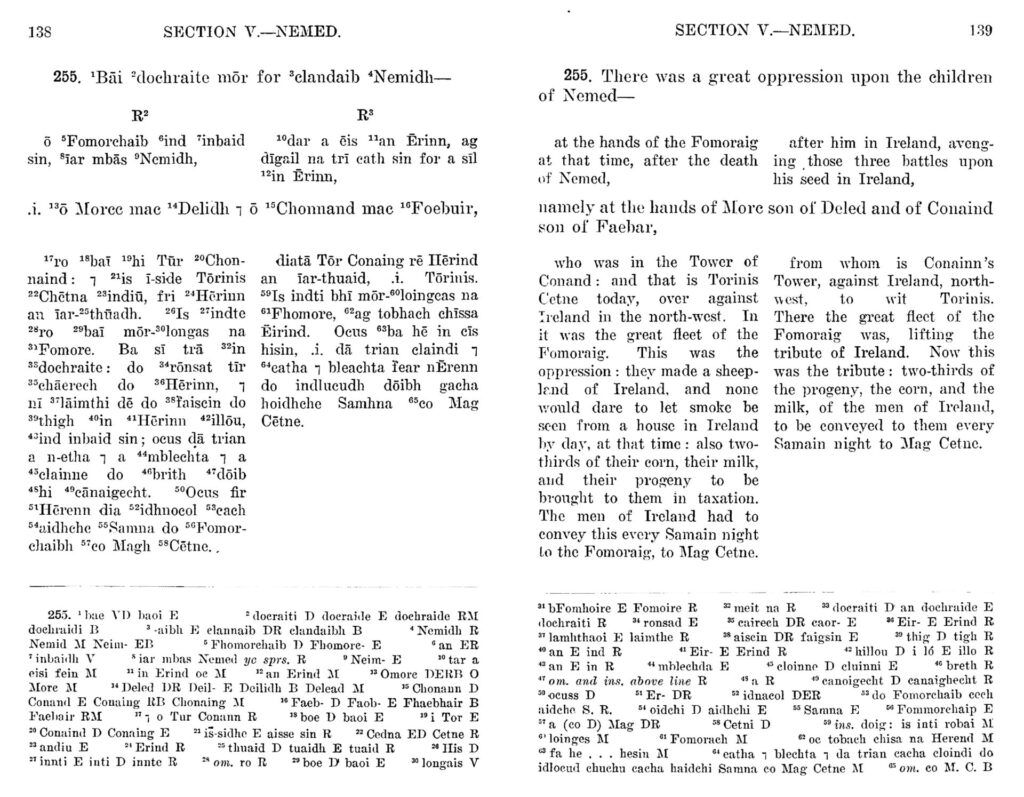
Talking about the Nemedian oppression at the hands of the Fomorians.
R. A. Stewart Macalister (1940)
Eventually they rose up and stormed Conand’s Tower, but Morc arrived with a great fleet, and in the slaughter and the drowning that followed only thirty of Nemed’s people escaped.
You may have come across this tax described as one-third rather than two-thirds. That version comes from Lady Gregory’s Gods and Fighting Men (1904), a beautiful and hugely influential retelling, where a tax of “a third part” of corn, milk and children is laid on the Tuatha Dé Danann during the reign of Bres (who happened to be descendants of the Nemedians returning from their sojourn in Greece). Lady Gregory was weaving several medieval sources into one flowing narrative, and the figure shifted along the way.
If you are quoting the medieval text, it is two-thirds, paid by the Nemedians.
Scholars have suggested that this tribute of children at the onset of winter may preserve a distant memory of sacrifice, and the Dindshenchas tells a similar story of firstborn offerings at Mag Slécht (or the ‘plain of prostrations’) to the idol Crom Cróich.
These are interpretations, and we should hold them lightly, but the pattern of Samhain as the season of reckoning, when debts fall due and the darkness takes its share, runs right through the literature.
Bres, Every Smoke in Ireland, and the Battle at Samhain
The Fomorians return in Cath Maige Tuired (The Second Battle of Mag Tuired), a saga surviving in a single sixteenth-century manuscript but drawing on much older tradition. When Bres, half Fomorian and half Tuatha Dé Danann, became king, three Fomorian kings, Indech, Elatha and Tethra, imposed their tribute on Ireland so thoroughly that there was “not a smoke from a house in Ireland” that was not under it. The great champions of the Tuatha Dé were put to labour. Ogma hauled firewood and the Dagda dug the ramparts of the king’s fort.
What finally brought Bres down was his meanness. The nobles complained that their knives were never greased at his table and their breath never smelled of ale after a visit to his house.
The poet Coirpre, lodged in a small dark room without a fire and fed three small dry cakes, composed the first satire ever made in Ireland, and from that day Bres’s fortunes declined. The war that followed came to a head at Samhain.
“Without food quickly on a dish,
Without a cow’s milk on which a calf grows,
Without a man’s habitation after darkness remains,
Without payment for a company of storytellers –
Let that be Bres’s condition.”— Cath Maige Tuired “The Second Battle of Mag Tuired.”
Translated by Elizabeth A. Gray for the Irish Texts Society, 1982
The Dagda had arranged to meet a woman in Glenn Etin, near the river Unshin in Co. Sligo, around the Samhain of the battle. He found her washing at the river with one foot on each bank, and the place where they lay together was called “the Bed of the Couple” ever after. The woman was the Morrígan, and she promised him her help against the Fomorians.
The Tuatha Dé gathered on the eve of Samhain, and the battle in which Lug killed Balor and broke the Fomorian power was fought at the turn of winter.
A Night When the Mounds Stand Open
Once you start looking, Samhain is everywhere in the medieval literature, and almost always as the night when the Otherworld comes close. The belief that this was the prime night that the veil between the two worlds was at its thinnest permeated the psyche of the early Irish.
In Echtra Nerai (The Adventure of Nera), Ailill and Medb are feasting at Ráth Crúachan in Co. Roscommon on Samhain night. Ailill offers a prize to anyone brave enough to go out and tie a twig around the ankle of one of two captives hanged the day before. Nera goes, the corpse speaks to him and demands a drink, and Nera ends up following a host of the síd into the cave of Crúachan, the place we now know as Oweynagat, the Cave of the Cats. Inside he learns that the burning of Crúachan he saw on the way in was a vision of the following Samhain, and that it will come true unless Medb strikes first.
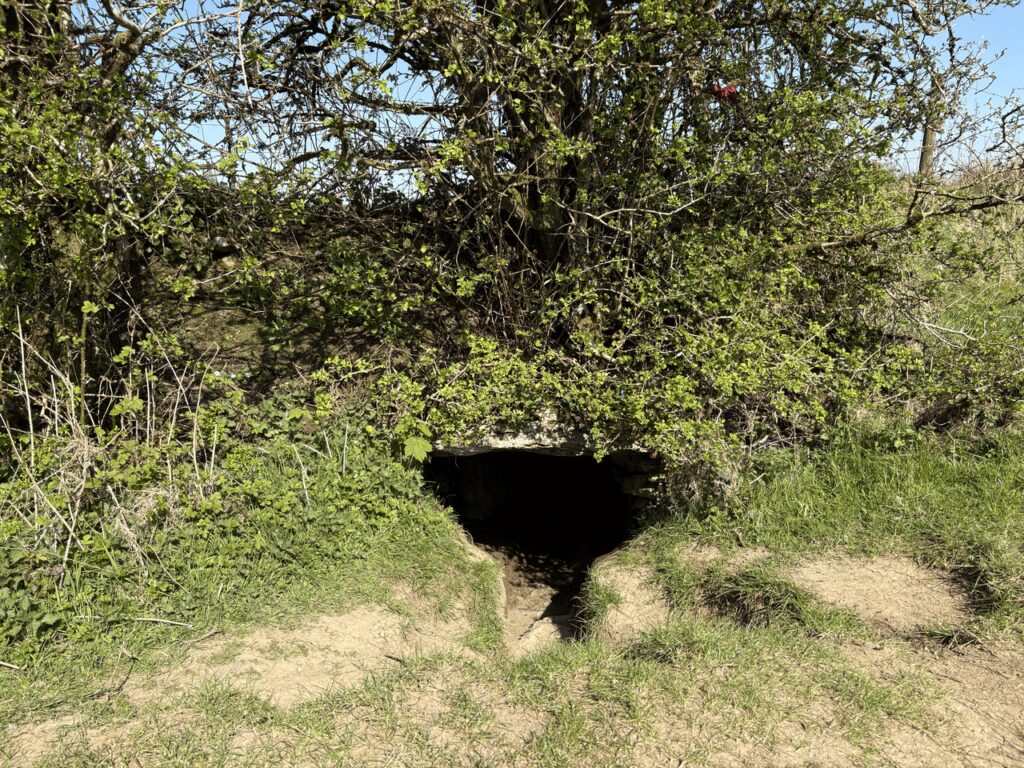
As seen from the outside.
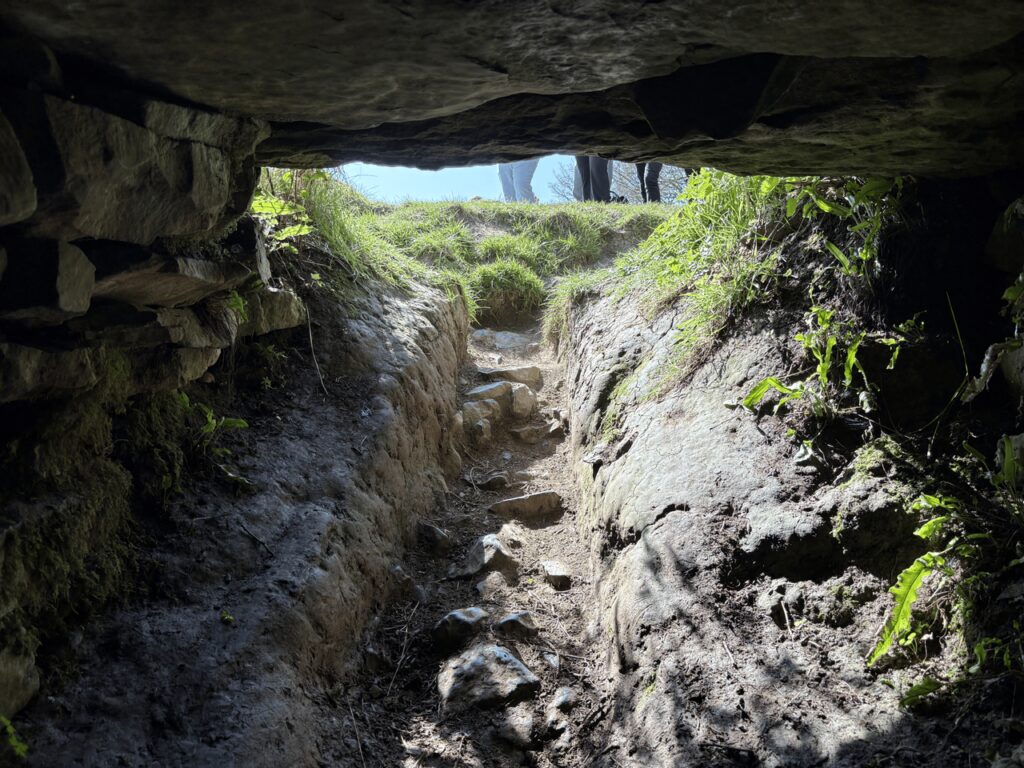
As seen from the inside.
In Serglige Con Culainn (The Wasting Sickness of Cú Chulainn), the Ulaid hold their assembly at Mag Muirthemne for the three days before Samhain, Samhain itself and the three days after, a week of meetings, games and feasting. The tale says this is why “the thirds of Samhain” are kept as they are. It is at this assembly that Otherworld birds appear, and Cú Chulainn’s long enchantment by the women of the síd begins.
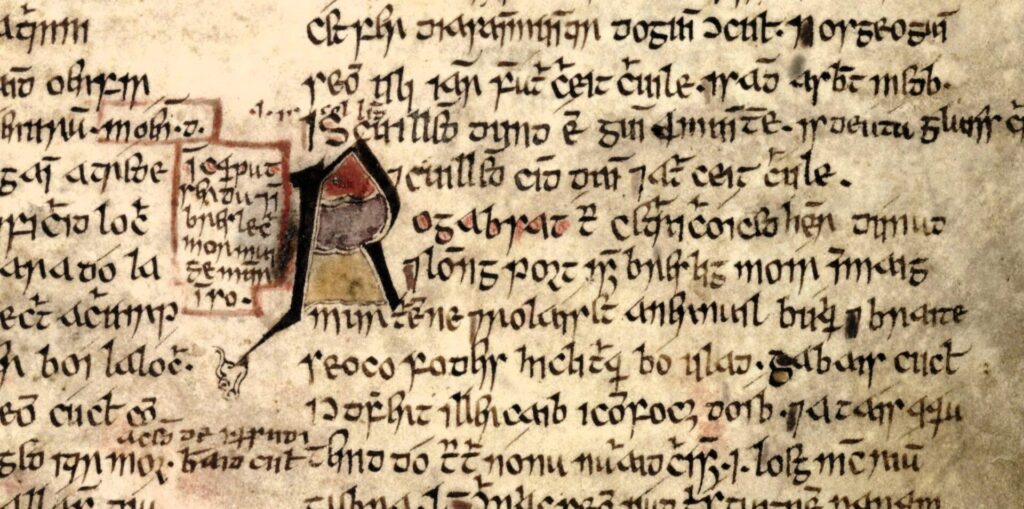
(fols. 43a–50b)
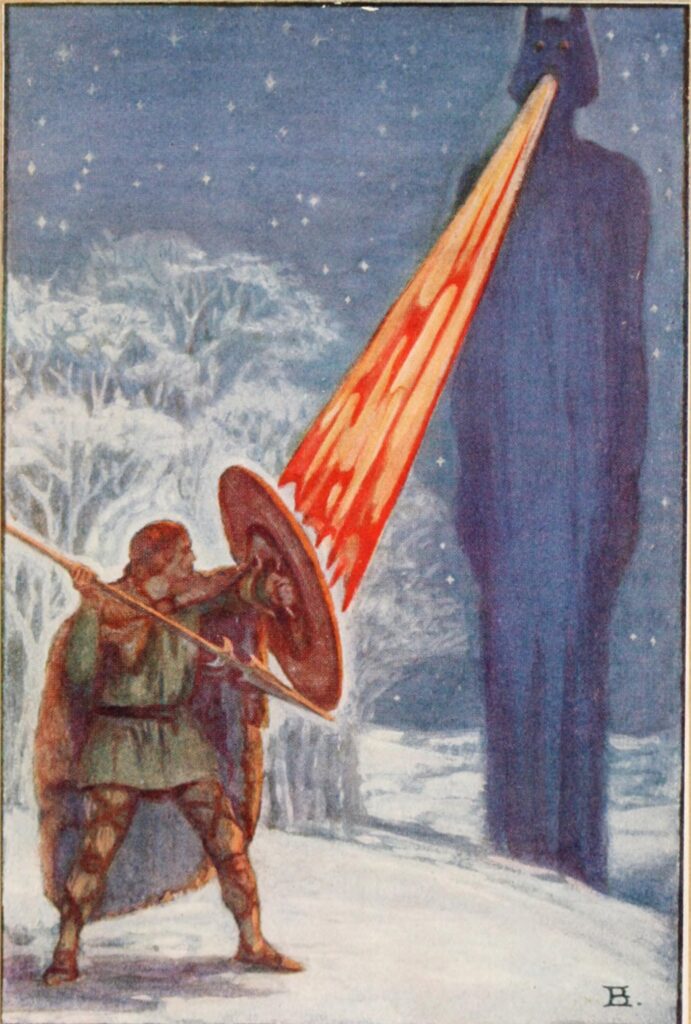
In the boyhood deeds of Fionn mac Cumhaill, a being called Aillén mac Midgna came out of the fairy mound every Samhain, lulled the court of Tara to sleep with his music, and burned the royal hall with his breath. The young Fionn stayed awake by pressing the point of a poisoned spear to his forehead and killed him, and that deed won him the leadership of the Fianna.
In Aislinge Óenguso (The Dream of Óengus), it is at Samhain that Óengus finds the girl of his dreams, Cáer, in the form of a swan, and he becomes a swan himself to fly away with her.
The thread that joins these stories is the síd, the ancient mounds which the medieval Irish imagined as halls of the Tuatha Dé Danann.
On Samhain night they open, the people inside walk abroad, and mortals can cross over, sometimes by choice and often not. That idea never went away. It simply moved from the manuscripts into the kitchens of rural Ireland.
Samhain in Brehon Law
For those of you who follow the Academy for the law, Samhain was a working date in the legal and economic calendar of early Ireland as well as a date in the sagas.
Early Irish society ran on clientship. A lord advanced a fief of cattle (or sometimes land) to his clients, and in return the client owed food-rent, labour and, for the base client (céile giallnai), the duty of winter hospitality, known as cóe.
Winter began at Samhain, so this was the season when lords went on circuit to be feasted by the people who owed them. By Samhain the corn was in, the cattle were down from the summer pastures, and the animals that would not be kept through winter were slaughtered.
The pig was the classic Samhain render. An old glossary describes the food carried to the lord before Christmas as “the Samhain pig”, and the Church gave the custom a Christian pedigree by claiming that St Patrick had given the first Samhain pig to St Martin.
The Senchas Már contains a whole tract on these obligations, Di Dligiud Raith ocus Somaíne la Flaith (On the Right of the Fief and the Renders Due to a Lord), and failure to provide a render was punished with a fine on top of double restitution of what had been withheld.
Samhain was also a season for law-making on a grander scale.
The tale Cath Crinna describes the kings of Ireland gathering at Tara for the Feast of Tara, from a fortnight before Samhain to a fortnight after, and says that the laws enacted there could not be broken until the next assembly without the offender being outlawed.
Geoffrey Keating, writing in the 1630s, describes the Feis Temro as a triennial assembly at Samhain where laws were made and histories recorded, preceded by three days of feasting before Samhain and three after. Keating was writing a thousand years after the events he describes, so his detail needs care, but the association of Samhain with assembly, judgment and the renewal of law runs from the sagas through to him.
Here is where I want to offer a reading of my own, and I flag it as interpretation rather than settled scholarship. Set the Fomorian tribute beside the law of clientship and the myth starts to look like its dark mirror.
In law, a render paid at Samhain was the client’s side of a reciprocal contract. The lord gave stock and protection, the client gave food and hospitality, and both sides had remedies if the other defaulted.
The Fomorian tax takes everything and gives nothing back. It takes children, which no lawful render could ever include, and it takes two-thirds, where the law fixed rents in proportion to the fief received.
Bres, in his turn, is a lord who fails the most basic duty of lordship, which is to feed and honour the people who serve him, and he is brought down by satire, the poet’s legal weapon against a lord who will not pay what is due.
The medieval audience, who knew exactly what a lord owed his clients at Samhain, would have recognised both stories as pictures of tribute without justice.
That, to my mind, is one of the lessons these myths carry.
The season of rents and renders was also the season when people remembered what illegitimate power looked like.
The Fire on Tlachtga
You will often read that on Samhain eve every fire in Ireland was put out and rekindled from a great bonfire on Tlachtga, the Hill of Ward near Athboy in Co. Meath. That story comes from Keating, who wrote that the druids of Ireland assembled at Tlachtga on Samhain eve to offer sacrifice and that every hearth had to be relit from that fire on payment of a tax to the king of Munster.
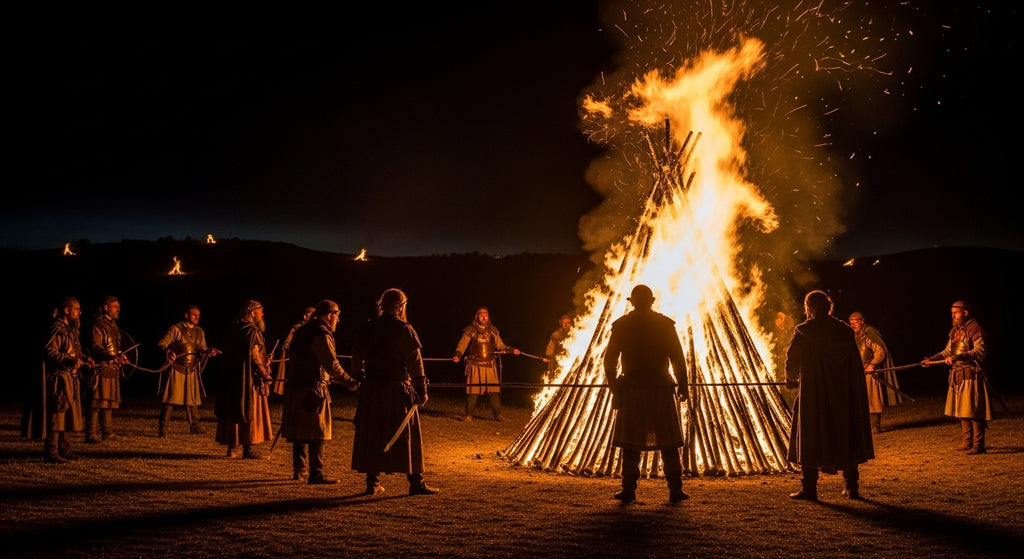
It is a vivid account, but Keating is our earliest source for it. The fire ceremony does not appear in the metrical or prose Dindshenchas, and Keating, a Catholic priest writing about pagans, had his own reasons for colouring the scene.
Excavations on the hill in recent years have found evidence of intense burning, which keeps the question interesting. The honest position is that Tlachtga was an important site with a Samhain tradition attached, and that the “national fire” ritual is a seventeenth-century description we cannot yet confirm from earlier texts.
The Púca Festival in Meath has revived the fire on the hill, and it is a fine sight whether or not the druids ever lit it.
All Hallows and the Church Calendar
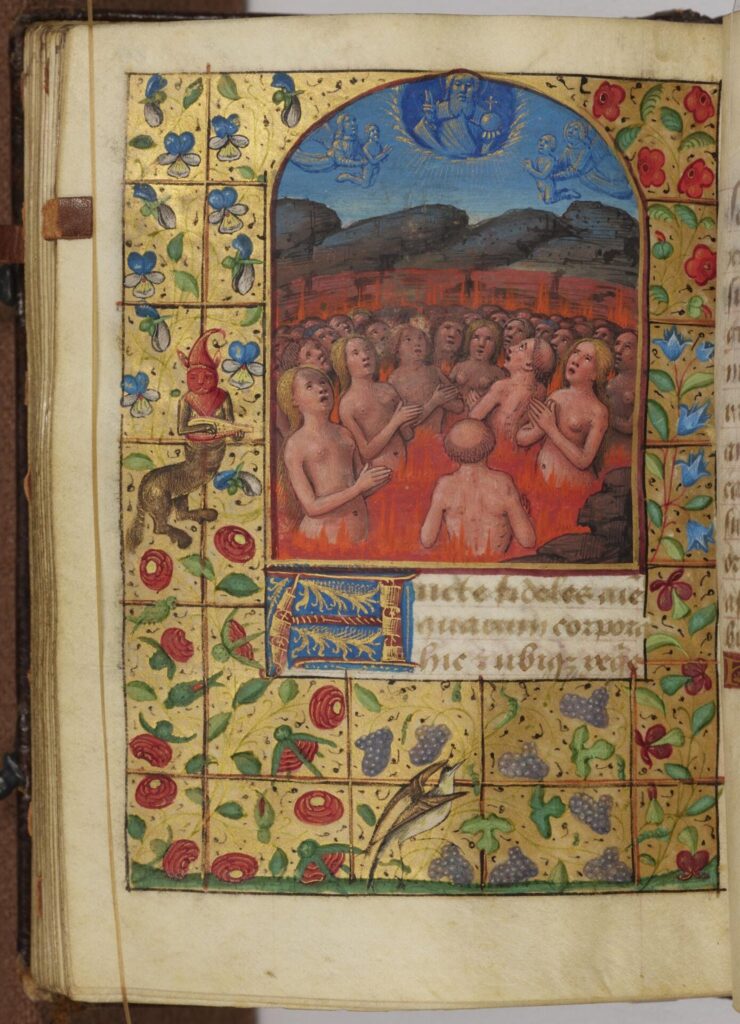
The name Halloween is Christian. It is All Hallows’ Eve, the vigil before All Saints’ Day on 1 November, with All Souls’ Day following on 2 November.
You will often hear that the Church moved All Saints to 1 November to swallow up Samhain. The evidence is more tangled than that.
The early Irish martyrologies, the Martyrology of Tallaght and the Félire Óengusso, mark a feast of all the saints of Europe on 20 April, although the Félire also notes a great host of saints at Samhain.
The 1 November date was being kept in England and Germany by around 800, and in 835 the Emperor Louis the Pious, at the request of Pope Gregory IV, made it the rule across the Frankish lands.
Whatever the Church intended, the outcome in Ireland was a meeting of two traditions. Samhain, the night when the mounds opened, sat beside All Souls, the season for praying for the dead, and Irish folk belief blended the two so thoroughly that by the twentieth century people in Leitrim were sweeping the hearth and keeping a good fire on Hallow Eve so that the souls released from Purgatory could visit their old homes.
Why We Dress Up
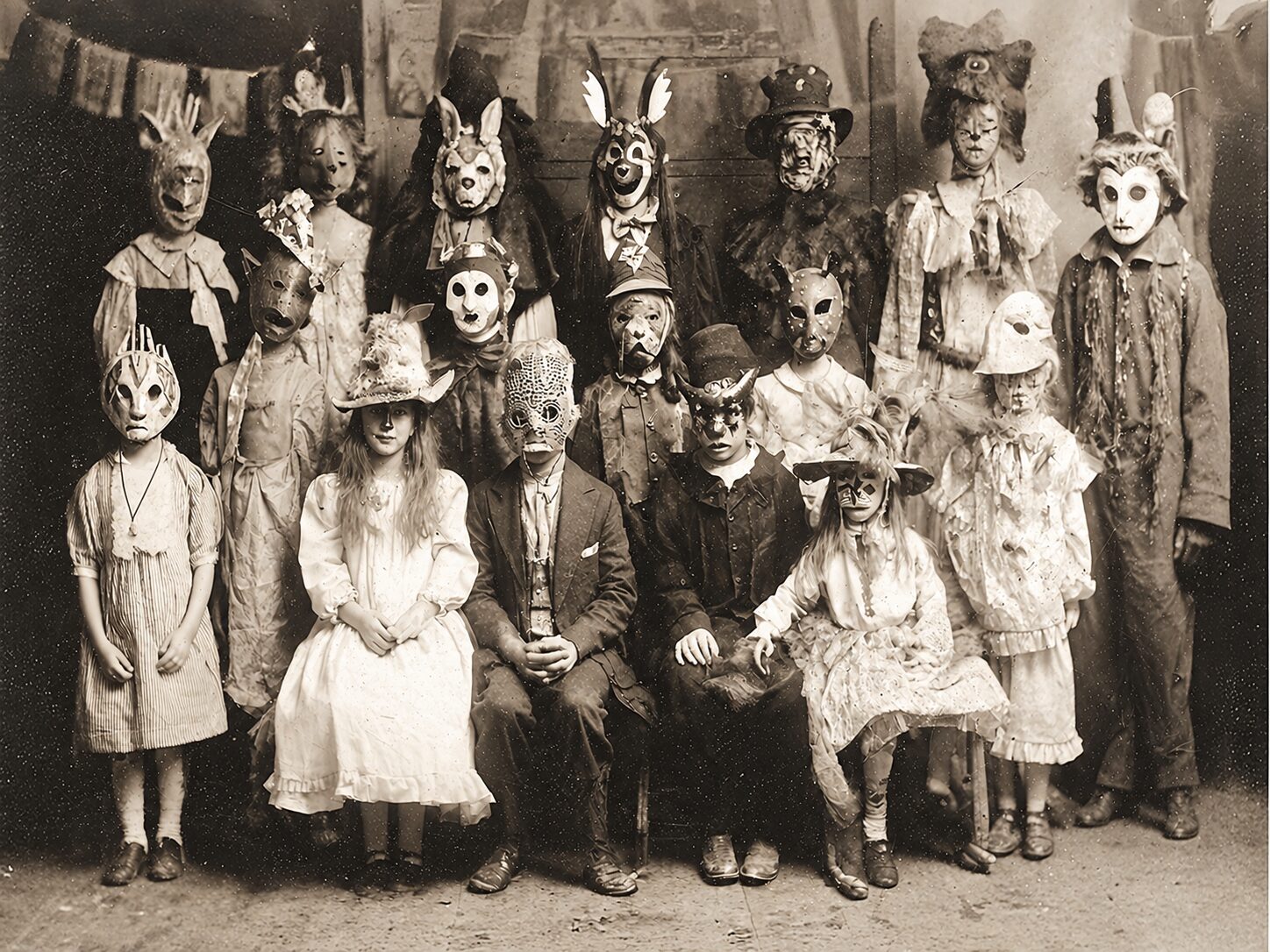
This brings us to costumes, and to the explanation many Irish families have given for generations. On Samhain night the aos sí, the fairy folk, were abroad, and they were not to be trifled with.
Anyone caught outdoors could be taken. Dressing up, the story goes, made you look like one of them, or at least nothing worth stealing, so that you could pass among them unharmed.
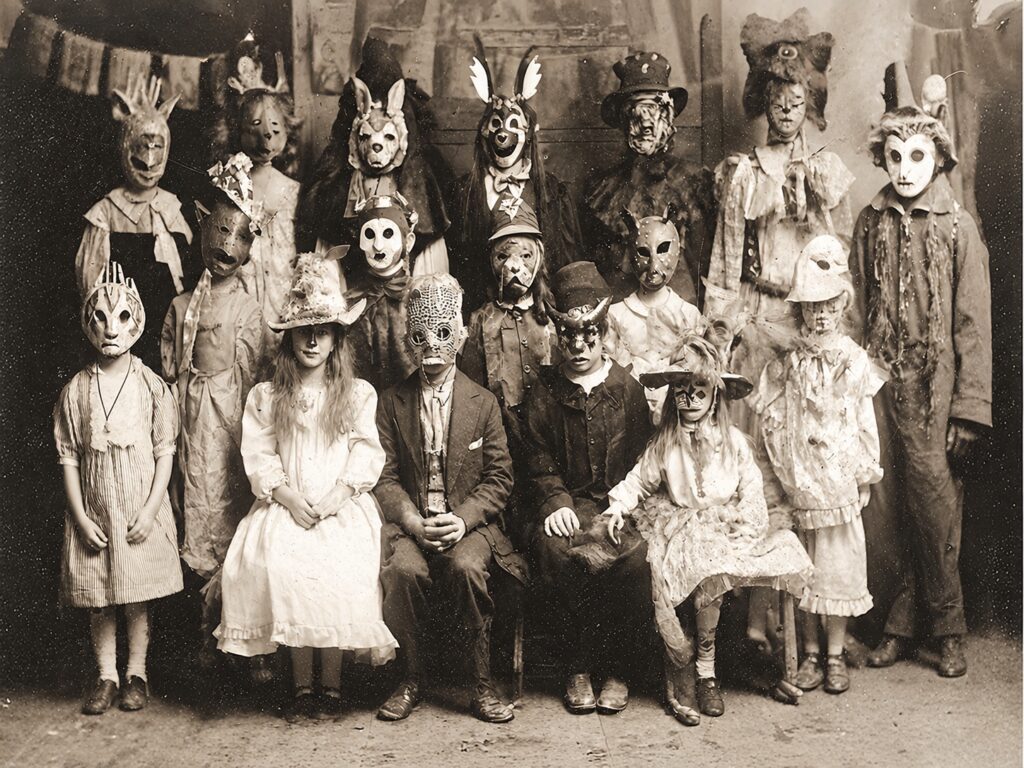
There is a solid foundation of Irish belief under this.
The folklore collected from schoolchildren for the Schools’ Collection in the 1930s is full of it.
In Carndonagh, Co. Donegal, children were told that the fairies were out on Hallow Eve and might take away anyone found outside.
In Moynalty, Co. Meath, the old people would not go to the well after dark for fear the fairies would pull them in.
The nineteenth-century writer Lageniensis described the púca as especially mischievous on this night, carrying mortals off to fairy land.
Behind all of this sits the terror of the changeling, the belief that the fairies would steal a child (or a young wife) and leave a sickly fairy double in their place.
That belief had real and sometimes terrible consequences, as the case of Bridget Cleary in Tipperary in 1895 shows, and I have written about it in detail on the blog.
Irish parents did use disguise against the fairies. Folklorists record boys being dressed as girls to confuse the fairies, and tongs or other iron objects were laid across the cradle for protection.
So the fairy explanation for Halloween costumes is rooted in genuine Irish belief.
What we cannot do is prove that disguise at Samhain began for that reason.
House-visiting in disguise (guising, or mumming) is recorded in Scotland and Ireland from about the sixteenth century, centuries after the sagas were written down.
Children in some parts of Ireland were told that guisers dressed as the dead to fool the evil spirits abroad that night, but Michael Fortune, who has recorded Irish Halloween customs for over twenty years, thinks that story has grown far too many legs, and plenty of guisers went out simply for the fun, the food and a bit of devilment. Fortune has mapped the custom across Ireland and found it was strongest in Leinster and Ulster, with only pockets in Munster and Connacht. People he interviewed in Mayo and Sligo said they never saw Halloween guisers until the 1970s.
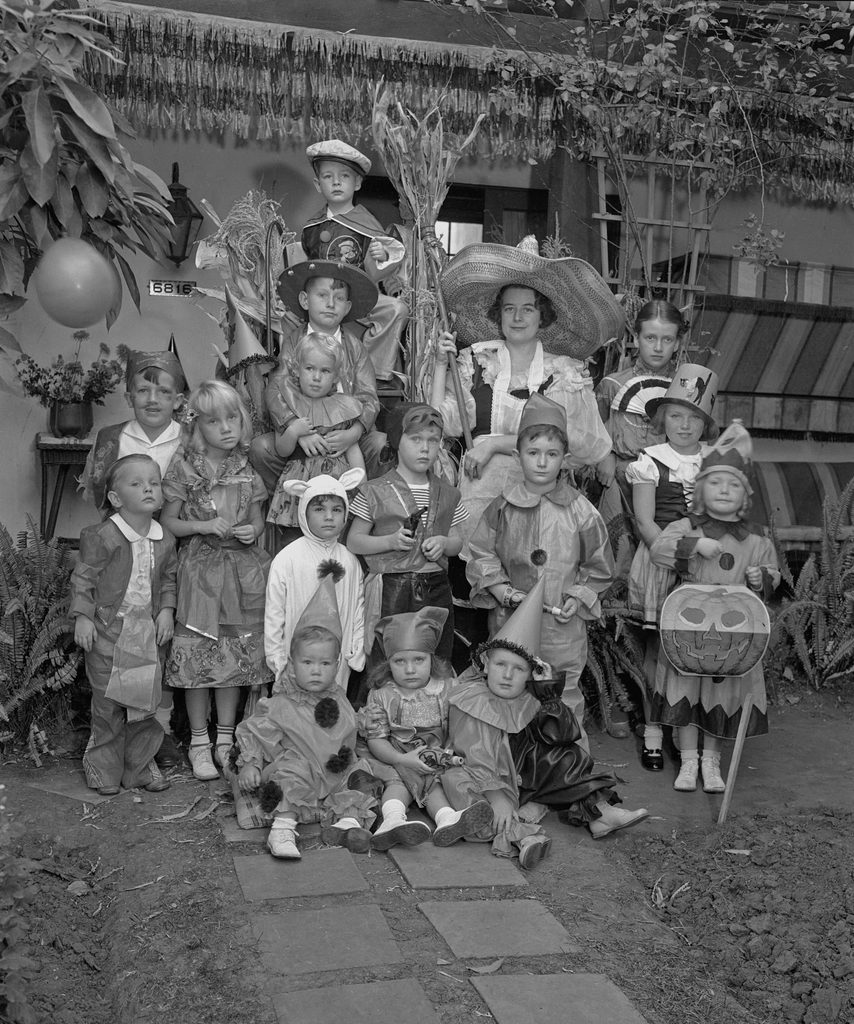
The disguises themselves were homemade and frightening rather than fairy-like.
In Clonshagh in north Dublin, boys blackened their faces with soot and dressed as old men and old hags, and a ringleader sang for apples, nuts and the odd coin.
In Clongorey, Co. Kildare, the house-visitors were known as the púca boys. Fortune collected local names for the night that are a joy in themselves, from Vizzarding Night and Blackmen Night to Púca Night and Snap Apple Night.
The fairy explanation, then, is best understood as the meaning Irish people gave the custom, and that meaning is part of the history too.
From Turnip to Pumpkin
Before the pumpkin, Ireland had the turnip. In the nineteenth century, people in Ireland, Scotland and parts of England and Wales hollowed out turnips, mangels and even large potatoes on Halloween, carved faces into them and set a coal or candle inside. (In Ireland “turnip” usually meant what the English call a swede.) The National Museum of Ireland holds a carved turnip lantern from this tradition, and it is well worth looking up.
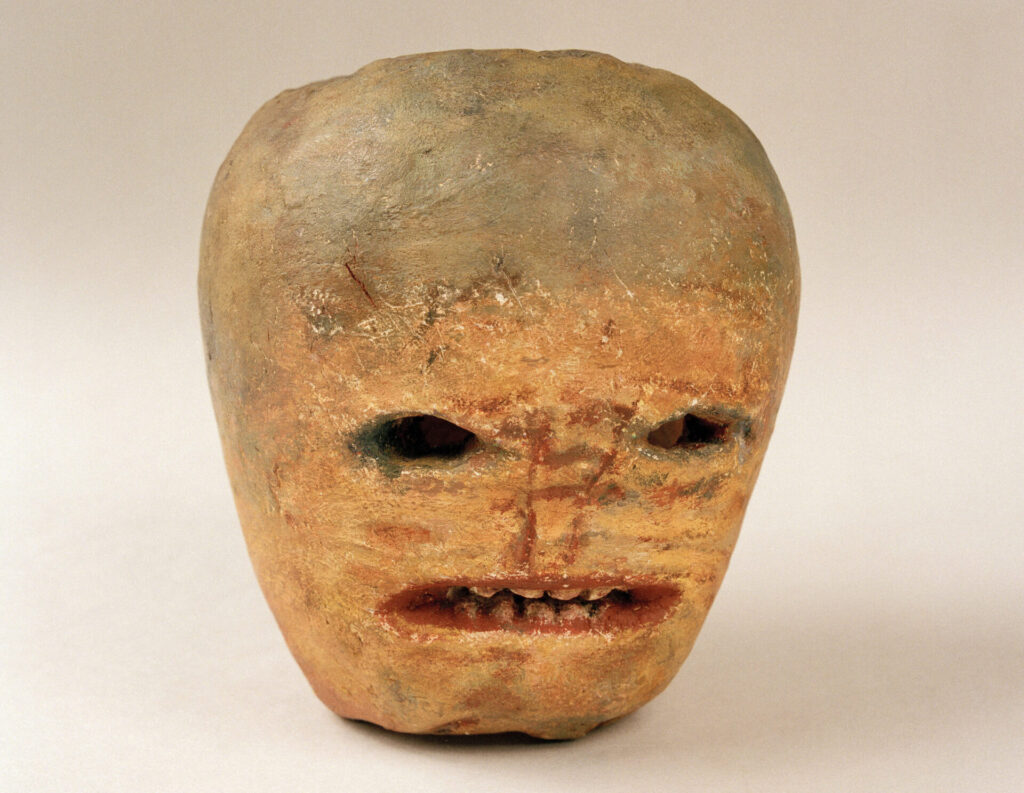
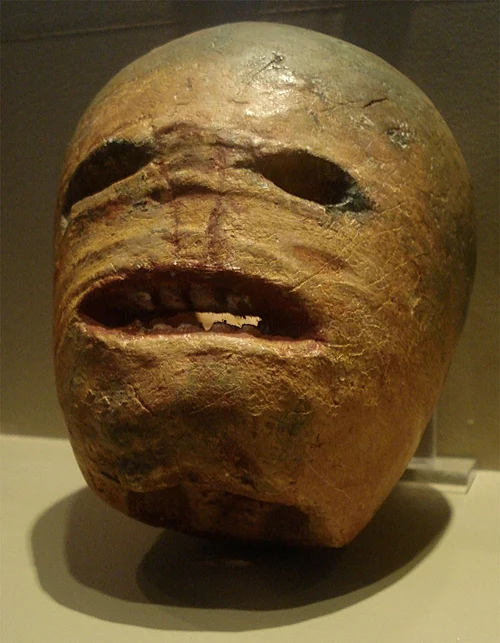
The earliest forms of “jack-o’-lanterns” were carved into turnips.
Very creepy, I think you’ll agree.
The name “jack-o’-lantern” has its own history. In English it first meant the ignis fatuus, the flickering marsh-light over bogs, also called the will-o’-the-wisp, and it was not applied to a carved vegetable until the 1830s.
The Irish tale that ties the light to a person is the story of Jack, a drinker and trickster who outwits the Devil, is barred from both Heaven and Hell when he dies, and is left to wander with a single ember from Hell in a hollowed turnip.
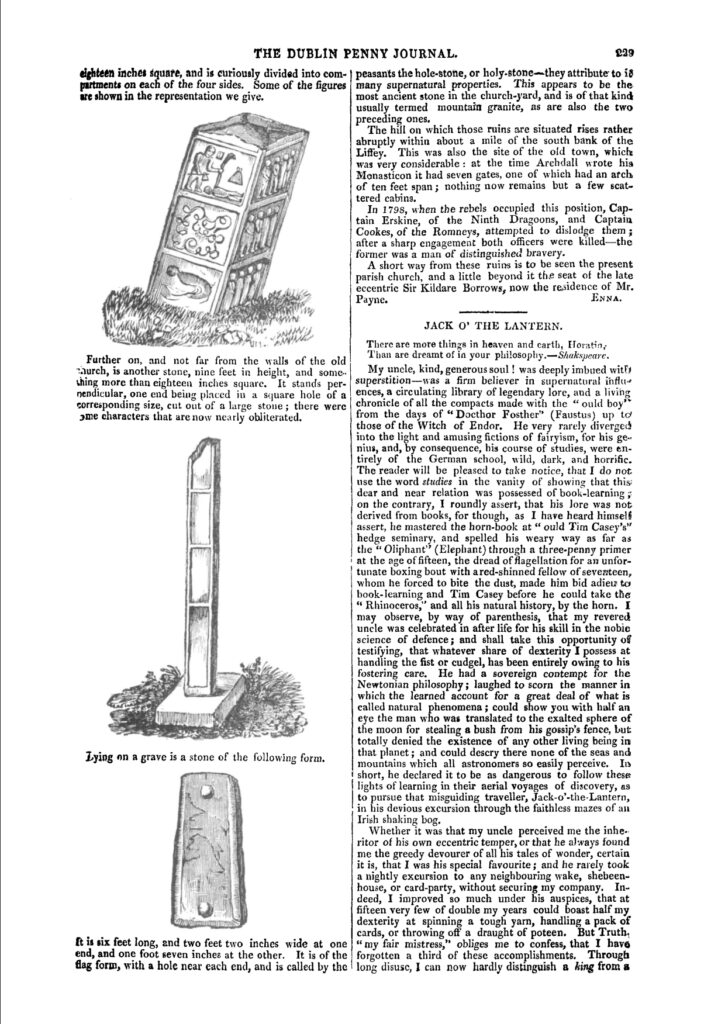
Click to read.
One of the earliest Irish versions in print appeared in the Dublin Penny Journal in January 1836, told as a story the writer heard from his uncle, who explained the lights over a quaking bog as poor Jack on his endless rounds.
The popular “Stingy Jack” version, with its drink, its silver cross and its turnip, is a local Irish dressing on a much older plot, the smith or rogue who tricks the Devil, which has relatives in folktales across Europe.
The pumpkin came in on the far side of the Atlantic. The Irish carried their Halloween to North America in large numbers during and after the Great Hunger, alongside Scottish emigrants with their own guising traditions.
In America, they met the pumpkin, a native of the Americas that was already carved at harvest-time and closely associated with Thanksgiving.
The historian Nicholas Rogers describes Halloween as an ethnic holiday in the mid-nineteenth century that had become a continental one by the end of it.
The earliest clear link between carved pumpkins and Halloween that I have found is a report in the Kingston, Ontario Daily News on 1 November 1866, which describes a great sacrifice of pumpkins to make lit faces with a stub of tallow candle inside.
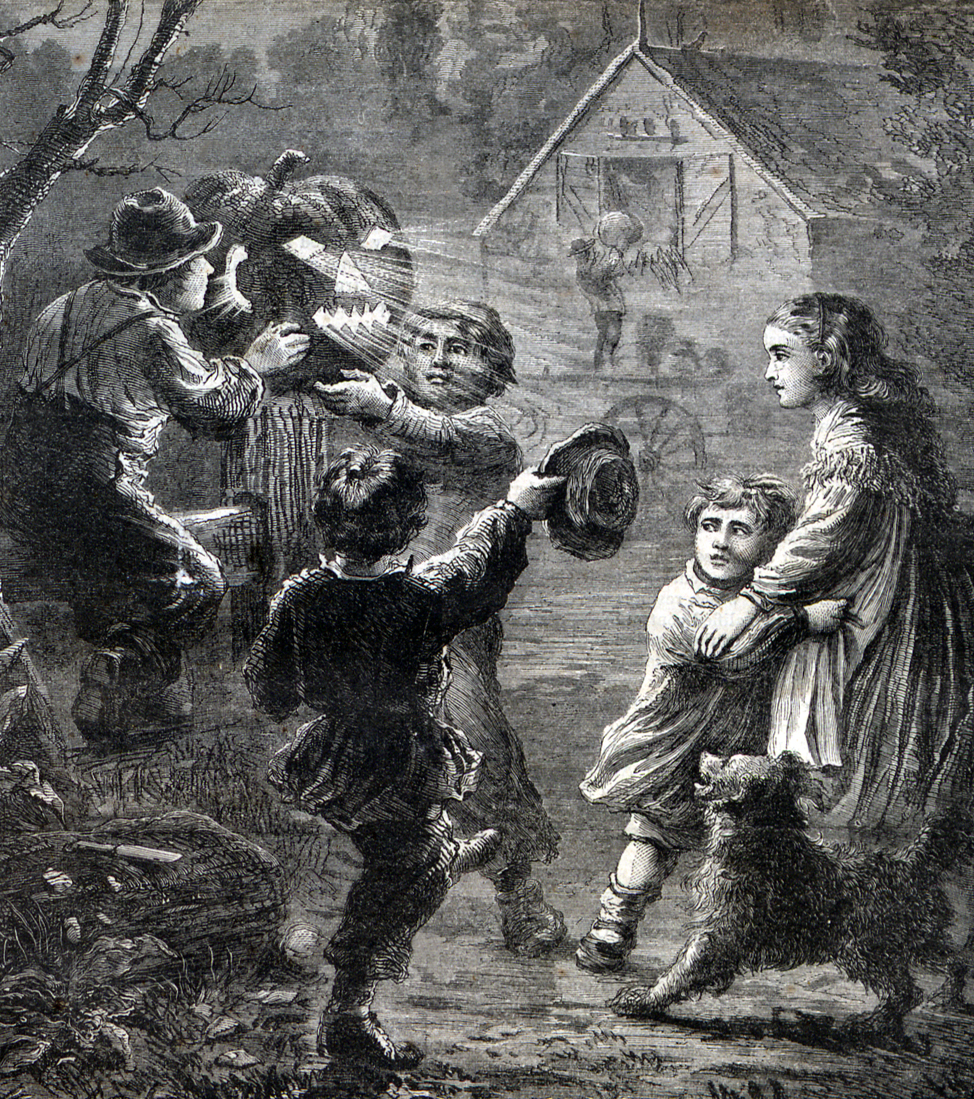
An illustration in Harper’s Weekly in 1867.
Cited as the first picture of a pumpkin jack-o’-lantern.
Even in the late nineteenth century, American party guides suggested carving lanterns from all sorts of things, but by around 1905 to 1910, according to the Halloween historian Lisa Morton, the pumpkin had become the king of the festival.
Irish Halloween customs crossed the Atlantic in print as well.
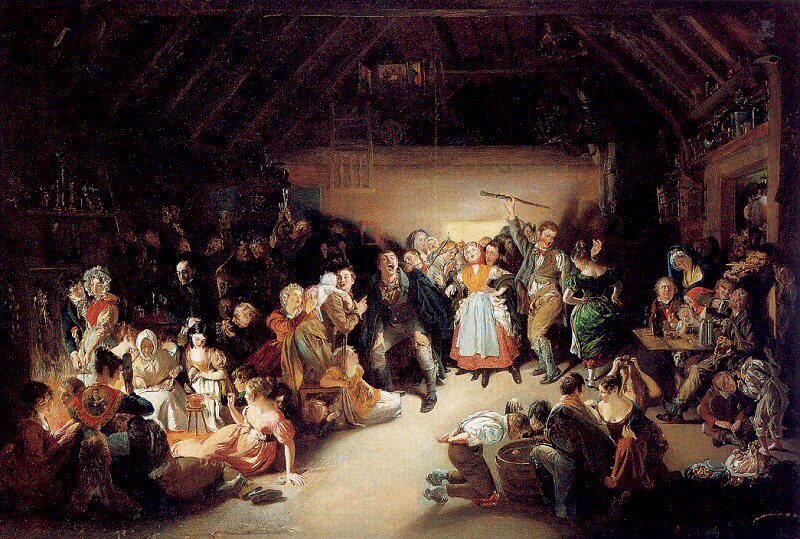
By Daniel Maclise.
Daniel Maclise’s painting Snap-Apple Night, based on a Halloween party he attended in Blarney, Co. Cork in 1832, was engraved in London in 1845, and in 1853 the New York firm of Currier & Ives issued a lithograph of it, putting an Irish Halloween on American walls while the emigration of the Great Hunger years was still in full flow.
Where Trick-or-Treating Comes From
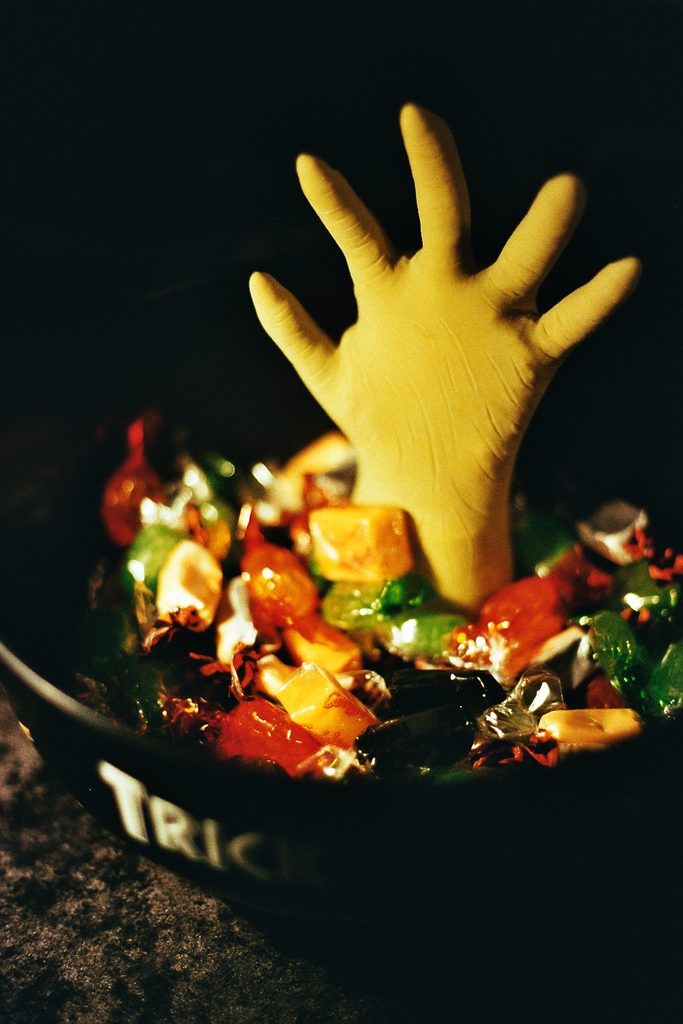
Trick-or-treating is the youngest of our customs, and its family tree has several branches. The oldest is the house-visiting of the guisers in Ireland and Scotland, who called to neighbours in disguise and expected apples, nuts or money for their song or rhyme.
In Ireland the call at the door was often “Help the Hallowe’en party!”
In England, the custom of souling saw poor people going door to door around All Souls, asking for soul cakes in return for prayers for the household’s dead.
In parts of the eastern United States, German immigrants brought belsnickling, a Christmas-season custom of costumed door-visiting.
And in early twentieth-century America, Halloween became notorious for pranks, which grew from carting off a neighbour’s gate (a favourite in rural Ireland too) to serious vandalism by the 1920s and 1930s.
The phrase itself first appears in Canada.
A newspaper in Sault Ste. Marie, Ontario reported children calling out “Tricks or treats!” in 1917, and the full form “trick or treat” is recorded from the hamlet of Blackie, Alberta, in reports printed in the Calgary Daily Herald and the Lethbridge Herald in November 1927, describing young “tormentors” at front and back doors demanding edible plunder.
Through the 1930s, towns across the United States promoted organised trick-or-treating and community parties as a way to buy off the pranksters.
Sugar rationing during the Second World War slowed it down, and the post-war baby boom and the confectionery industry did the rest.
As Lisa Morton likes to point out, trick-or-treating as we know it is less than a hundred years old.
Its roots, though, run straight back to the guisers of Ireland and Scotland.
Barmbrack, Colcannon and Snap Apple
No Irish Halloween is complete without the food and the games.
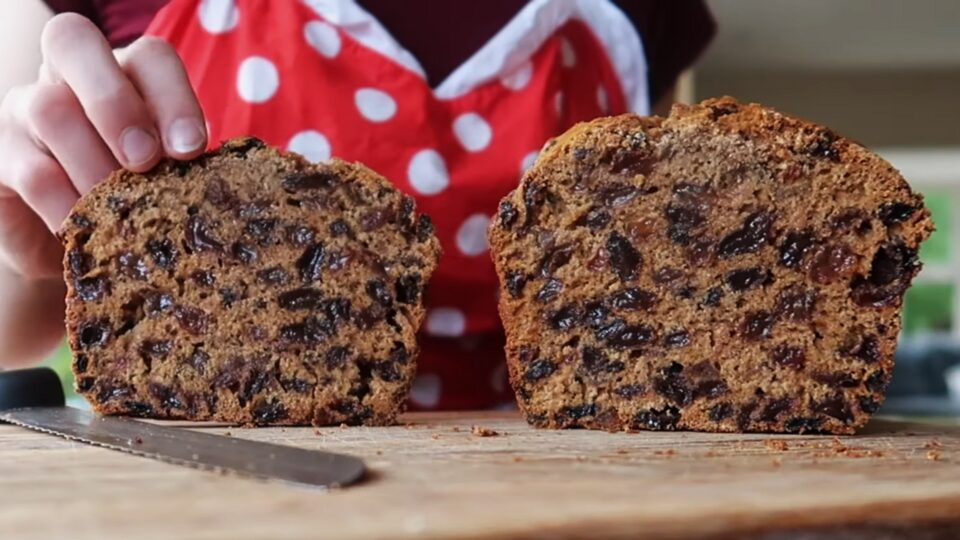
The báirín breac, our barmbrack, is a fruit loaf with a ring baked inside, and whoever finds the ring will marry within the year. In older households the brack might also hide a pea, a stick, a scrap of cloth and a coin, foretelling a year without marriage, a quarrelsome marriage, poverty or riches.
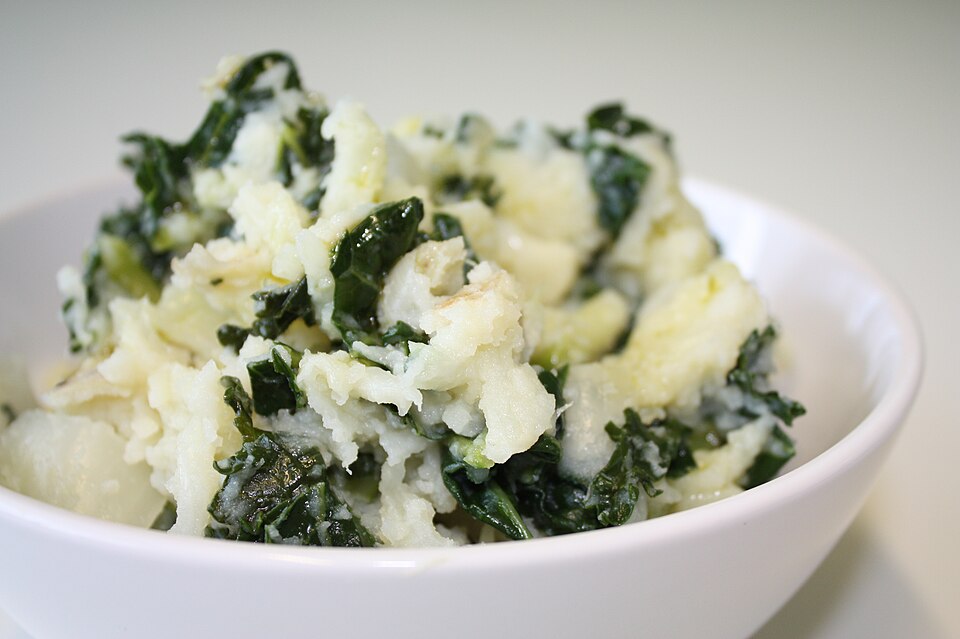
Colcannon, mashed potato with kale or cabbage, was the other great Halloween dish, and it too could hide a ring (or coins). The Irish who settled in Newfoundland kept the custom so faithfully that Halloween there was known as Colcannon Night.
The games were mostly about fate.
Snap apple involved trying to bite an apple hanging from the ceiling, sometimes on a turning stick with a lit candle at the other end. Children ducked for apples in a basin of water.
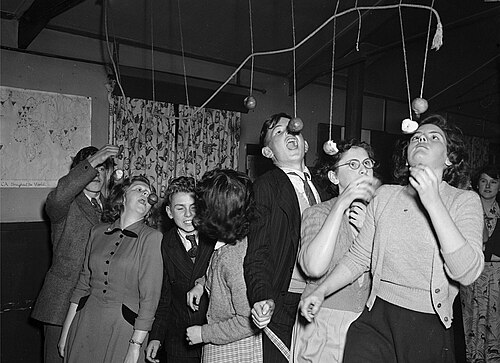
Couples placed nuts side by side on the fire to see whether they would burn together or jump apart.
In Massbrook, Co. Mayo, a blindfolded person chose between three saucers, a ring for marriage, clay for death and water for emigration across the sea.
In Tynagh, Co. Galway, a girl would sleep with ivy leaves under her pillow to dream of her future husband.
And after Samhain, nobody picked blackberries, because the púca had spoiled every one of them, and most accounts are not polite about how.
Keeping the Thread
When your children or grandchildren go out tomorrow night in costume, they are walking a path that runs from the guisers of Leinster and Ulster, through the fear of the aos sí and the changeling, back to the medieval stories of a night when the mounds stood open and the dead and the Otherworld came close.
Some links in that chain are younger than the popular books claim. The chain itself is real, and much of it is Irish.
What was Halloween called in your family or your parish, and what did you eat, play or carve?
I would love to hear from you in the comments.
And whatever you get up tomorrow…don’t let the fairies get you!
Oíche Shamhna shona daoibh!
Caoimhghín — Kevin.
Further Reading
Primary texts
- Lebor Gabála Érenn, ed. and trans. R.A.S. Macalister, 5 vols (Irish Texts Society, 1938–56). The Nemedian section is in Part III. Older translation at the Celtic Literature Collective: https://www.maryjones.us/ctexts/lebor3.html
- Cath Maige Tuired: The Second Battle of Mag Tuired, ed. and trans. Elizabeth A. Gray (Irish Texts Society, 1982). Online at CELT: https://celt.ucc.ie/published/T300010/
- Echtra Nerai, trans. Kuno Meyer, “The Adventures of Nera”, Revue Celtique 10 (1889). Online: https://www.maryjones.us/ctexts/nera.html
- Serglige Con Culainn (The Wasting Sickness of Cú Chulainn), available in several translations online and in Jeffrey Gantz, Early Irish Myths and Sagas (Penguin, 1981).
- Geoffrey Keating, Foras Feasa ar Éirinn, ed. and trans. David Comyn and P.S. Dinneen, 4 vols (Irish Texts Society, 1902–14). English translation online at CELT.
- Lady Gregory, Gods and Fighting Men (1904), for comparison with the medieval sources: https://www.gutenberg.org/ebooks/14465
Early Irish law and society
- Fergus Kelly, A Guide to Early Irish Law (DIAS, 1988).
- Fergus Kelly, Early Irish Farming (DIAS, 1997).
- Dáithí Ó hÓgáin, Myth, Legend and Romance: An Encyclopaedia of the Irish Folk Tradition (1991).
Folklore and the history of Halloween
- Kevin Danaher, The Year in Ireland (Mercier, 1972).
- Ronald Hutton, The Stations of the Sun: A History of the Ritual Year in Britain (Oxford University Press, 1996).
- Nicholas Rogers, Halloween: From Pagan Ritual to Party Night (Oxford University Press, 2002).
- E. W. (1836), “Jack o’ the Lantern,” The Dublin Penny Journal, vol. 4, no. 185, 16 January 1836, pp. 229–232. https://ia800101.us.archive.org/30/items/jstor-30004104/30004104.pdf
- Lisa Morton, Trick or Treat: A History of Halloween (Reaktion, 2012).
- Angela Bourke, The Burning of Bridget Cleary (Pimlico, 1999).
- Michael Fortune, “Untangling the Hallowe’en story”, RTÉ Culture (2023): https://www.rte.ie/culture/2023/1027/1413433-untangling-the-halloween-story-we-didnt-really-invent-it
- The Schools’ Collection, National Folklore Collection, UCD, at Dúchas: https://www.duchas.ie
- Barry Popik, “Trick or Treat”, for the earliest newspaper citations: https://barrypopik.com/blog/trick_or_treat
From the Brehon Academy blog
- Changelings, Fairies, and Witchcraft? The Full, Unsparing Account of Bridget Cleary’s Murder in March 1895: https://brehonacademy.org/changelings-fairies-and-witchcraft-the-full-unsparing-account-of-bridget-clearys-murder-in-march-1895/