To understand why Newfoundland sounds the way it does, you have to go back further than the fishery — back to the collapse of the old Gaelic order itself.
The defeat at Kinsale in 1601 broke the last serious military resistance to English conquest in Ireland, and the Flight of the Earls in 1607, when the last of the great Gaelic lords sailed into exile on the continent, left the province of the once great and Gaelic northern province of Ulster leaderless and open to plantation.
The Tudors were only too happy to oblige.
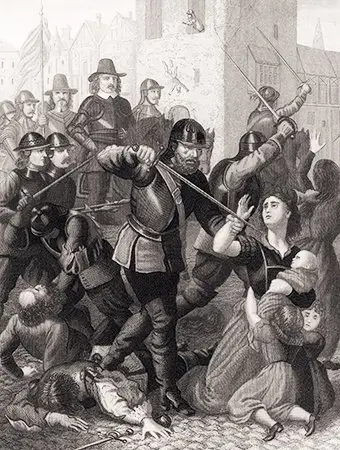
For the southeast — Waterford, Wexford, Kilkenny, south Tipperary, the counties that would later supply Newfoundland with its people — the following decades brought their own catastrophe: the Cromwellian conquest of the 1650s, which confiscated Catholic-owned land on a massive scale and drove much of the native population off the most productive ground, followed by the Williamite War of the 1690s and the broken promises of the Treaty of Limerick.
Out of that defeat came the Penal Laws, a body of legislation that, from the 1690s well into the 1700s, shut Catholics — the overwhelming majority in the southeast — out of land ownership, public office, voting, education, and the professions.

This wasn’t a single dramatic blow but a grinding, generational closing-off of any future.
Layered on top of it were recurring “subsistence crises,” the worst of which, the famine of 1740–41 known as Bliain an Áir, “the Year of the Slaughter,” killed a higher proportion of the population than the Great Famine would a century later.
By the early 1700s, a young Catholic man in Waterford or Wexford faced a homeland with no land to inherit, no vote, no access to Irish education, deprived of speaking his mother tongue, no path into a trade or profession, and a real chance of starvation.
That is the prelude — bleak, structural, and decades in the making — against which the emigration has to be understood.
The Fishery as the Way Out
What made Newfoundland the destination, rather than anywhere else, was the accident of trade routes. Waterford port sat on the shipping lane used by English vessels running the migratory cod fishery, stopping to take on provisions and crew before the Atlantic crossing.
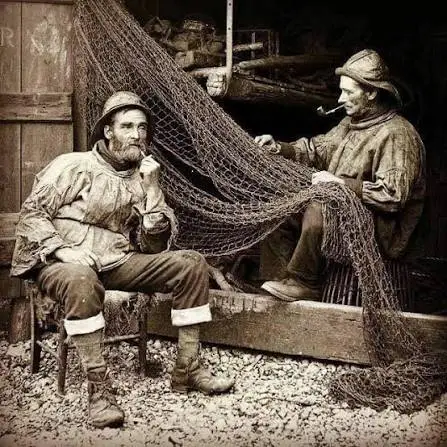
For men with nothing to lose at home, signing on as seasonal fishing labour was one of the few doors still open, and from the late 1600s onward thousands walked through it.
What began as seasonal work hardened, over the course of the 1700s, into permanent settlement — young men staying on through the winter, then for good, gradually joined by Irish women, until small year-round communities took shape along the Avalon Peninsula, around St John’s, Conception Bay, and the southern shore.
By around 1830, this wave was substantially complete, decades before the Great Famine sent its own, comparatively smaller, contribution of Irish migrants across the Atlantic.
The Irish language travelled with them.
Newfoundland carries an Irish name from this period — Talamh an Éisc, “the land of the fish” — and Munster Irish was spoken in outport communities into the 19th century, making the island one of the only places outside Ireland where the language put down lasting and significant roots.
Why it never faded
What preserved all of this — language, accent, custom — was isolation, sustained across generations.
These were small, scattered outport communities with little road access until well into the 20th century (Newfoundland only joined Canada in 1949), where people tended to marry within their own community and rarely moved on.
Cut off in this way, the English spoken there stayed remarkably close to the 18th-century southeast-Irish speech the original settlers brought with them, essentially unchanged while the accents back in Ireland continued to evolve.
Newfoundland English is sometimes described by linguists as one of the best surviving windows onto how the Irish actually sounded two and a half centuries ago.
The same isolation kept customs alive alongside speech — mumming at Christmas, particular traditions of storytelling and music, and turns of phrase that Irish visitors still recognise on the spot.
None of this was drift or nostalgia.
It was hardship — conquest, confiscation, penal law, and famine — that emptied out the southeast’s future and sent its people down the one route still open to them, and it was isolation on the far side of the Atlantic that let what they carried survive almost untouched.
Further Reading
- John Mannion, Irish Settlements in Eastern Canada: A Study of Cultural Transfer and Adaptation
- T.K. Pratt & Sandra Clarke, on Newfoundland English dialectology
- Aidan O’Hara, on Irish language survival in Newfoundland (Talamh an Éisc)